How Gritty Saved Philadelphia

from It’s Going Down

Report from Philadelphia, where a broad antifascist mobilization pushed the far-Right off the streets.

by Sam Bishop

In times of turmoil you often hear of certain individuals rising to the occasion and doing what must be done when others aren’t strong enough to do so.

In the city of brotherly love where many across the state are still reeling from the aftermath of last month’s deadly synagogue shooting, when faced with the prospect of far right marchers invading their city one individual did step up to the call. One individual did do what must be done when others weren’t strong enough to do it.

His name was Gritty and he was the one who scared the fascists out of Philly.

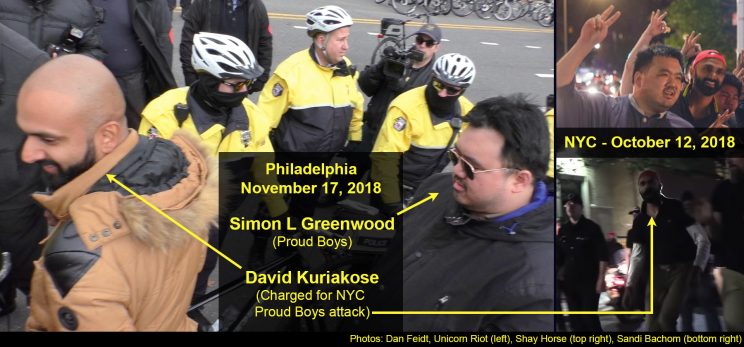
Only a few short weeks ago The Keystone State Skinheads, group whose members have been charged with hate crimes ranging from random attacks on minorities, to indiscriminately murdering the homeless had pledged to attend the rally. So had the now infamous Proud Boys who had been planning to attend the rally since its announcement just before many of their members were charged with assaulting protesters in New York.

Despite pledging to ban hate groups from attending the rally and despite the Proud Boys classification as a hate group by the Southern Poverty Law Center and despite the groups own founder describing the Proud Boys as a “gang” who “commits violence for fun.” Many of the organizers of the rally defended the group as tensions escalated.

The defense of the Proud Boys by the organizers of the rally only seemed to embolden those opposed to the rally who began organizing a counter protest named the “Push Back Campaign” and began monitoring some of the attendees of the rally. Going as far as to getting one man who was apparently invited as security for the rally fired from his job at Comcast after publicly revealing him as a member of the Proud Boys.

As more and more news came out about the rally, more members of the community became opposed to it. A local petition received over 1,000 signatures asking that the permit for the rally be pulled and fliers were put up around the city with pictures of far-Right leaders who vowed to attend warning citizens to be on the lookout for them.

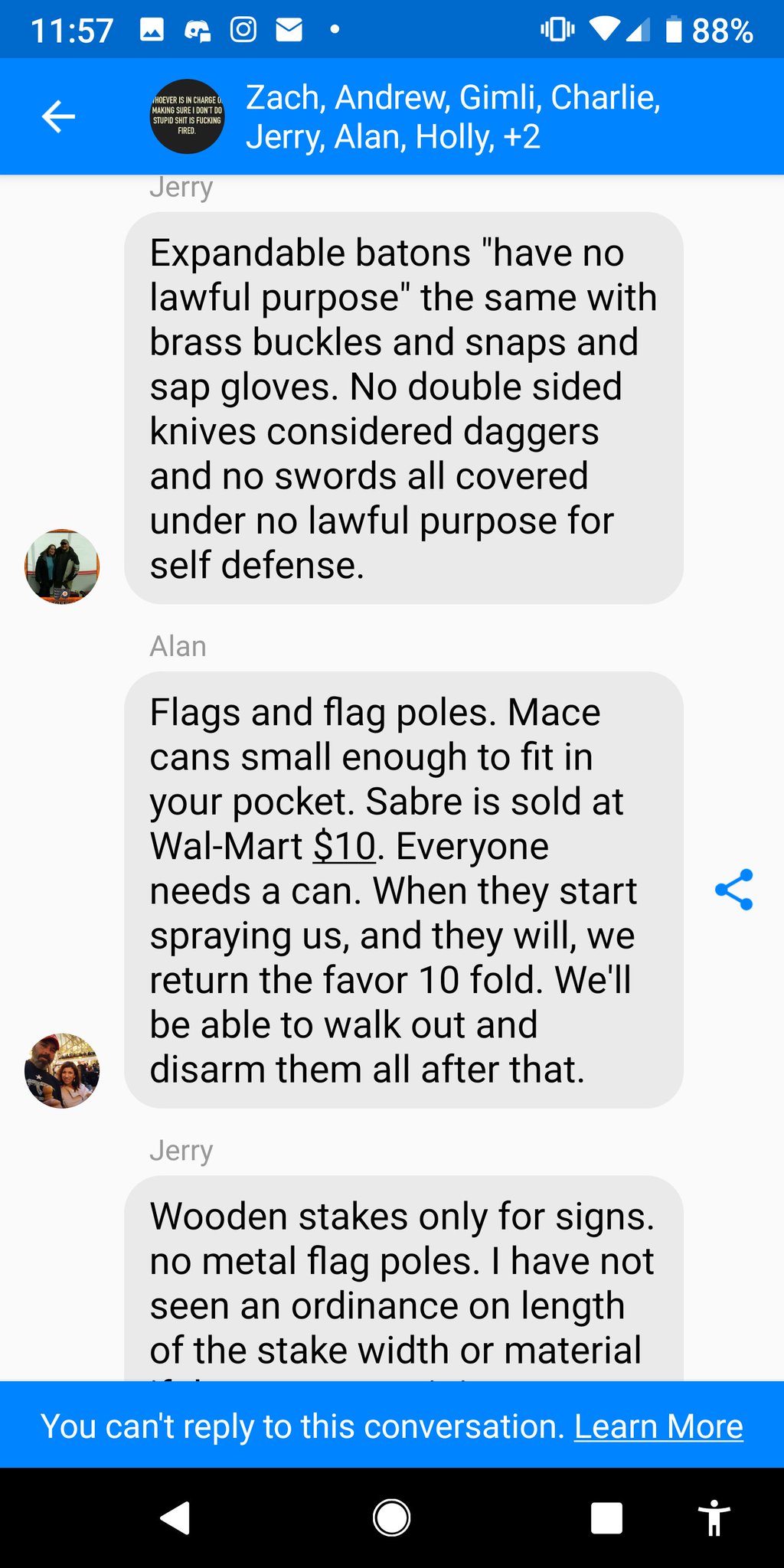
Tensions escalated more as leaked chat logs revealed that right wing rally goers were planning to bring any weapons they legally could.

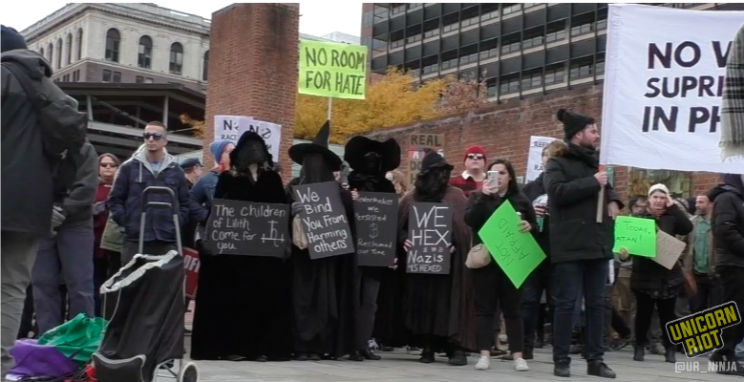
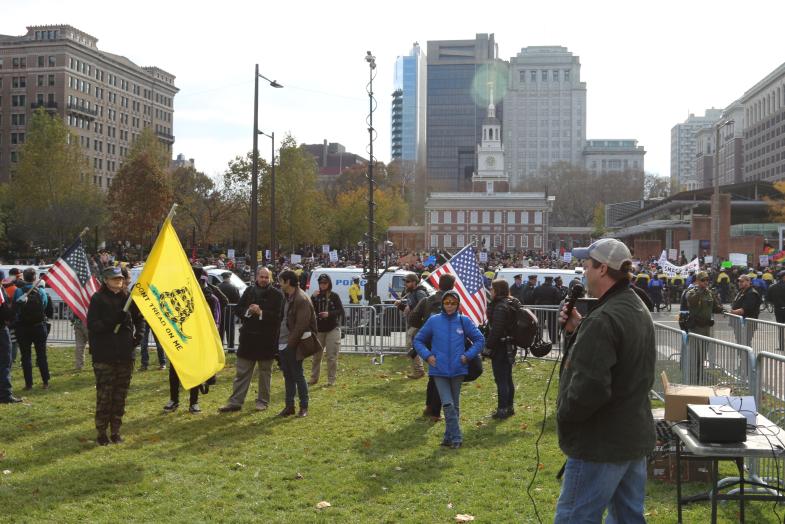
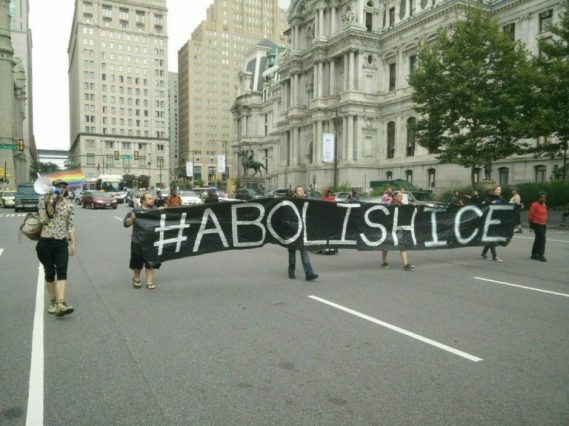
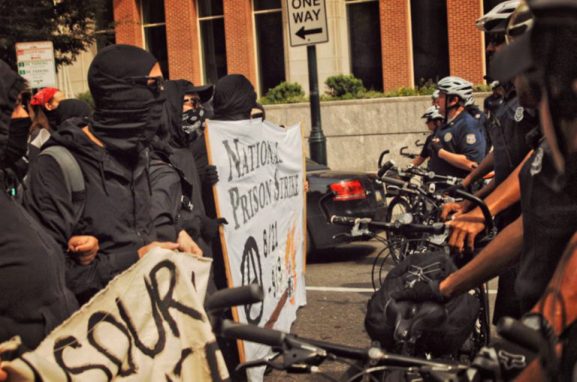
But as the day finally came the far-Right rally attendees were outnumbered within minutes. Police made quick work with their bicycles to push counter-demonstrators away from the sidewalk and across the street, allegedly injuring a protester in the process.

IMG_0029.jpg

As the rally got underway the number of right wing attendees expanded into tens of people while the number of counter-demonstrators swelled into the hundreds.

People from all walks of life showed up to oppose the Proud Boys they believed to be invading their city. Some at the event included Antifa and other local left wing political groups, while others were made up of ordinary people. Such as Priests, Rabbis and Veterans who came armed with signs that promoted peace and ‘civility.’

Chants were made and the crowd continued to swell until the number of attendees at the Pushback Rally passed 1,000 and the number of attendees at the, We the People Rally totaled at 34.

None of the promised Neo-Nazis or skinheads were spotted in the tiny crowd and though those who were involved in organizing the event had histories of clear bigotry most of those who were there resembled something closer to members of the Tea-Party as opposed to members of the Aryan Brotherhood. Trump and NRA hats covered the heads of those in attendance and heated conversations between self-described Libertarians and Republicans included arguments over whether or not Patriot Act became evil under Obama but Trump somehow is using it for good again or if it was always bad.

Speakers at the event included Tye Smith a black Trump supporter who is president of a police foundation that hosts its event dinners at the Church of Scientology and whose primary source of income appears to be through a company he owns which organizes erotic sex parties. [1]

Others who took charge of speaking during the rally includes a man self-identified as a Delaware small business owner who runs a Conservative Facebook page and who rallied against taxation being theft.

Just as he had begun to invite counter-demonstrators to send someone to cross the police barricade in order to debate him was when the first skirmish occurred.

Police began to mobilize and press was apparently pushed from the scene. Many of the right wing organizers assumed that the commotion was caused by Antifa attempting to force past the police barricade but it only took a few minutes before an officer explained how a member of the rally had snuck into the counter-demonstrator area and began attacking the counter-demonstrators. At that point they were instructed to wrap up the rally, which they soon did an hour before they had scheduled to end it.

After being followed by press and counter-demonstrators to a nearby a police station, officers formed a barricade around the exit to protect the right wing demonstrators until their Ubers could arrive. After two Ubers and a cab driver refused to pick up any of the right wing attendees upon learning who they were, many of the attendees at the rally were forced to simply walk home in shame.

Despite having three chapters and dozens of members in the state of Philadelphia I was told by rally security that only two members of the Proud Boys actually showed up.

What happened to scare away the dozens if not hundreds of far-Right members who planned to march besides the Liberty Bell leaving only the few moderate conservatives left to actually attend?

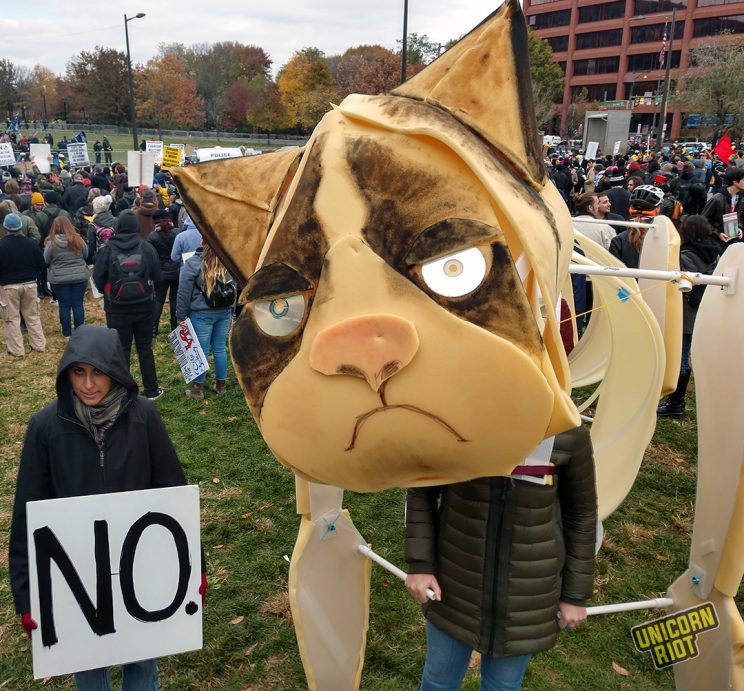
The answer of course is Gritty. More than a sports mascot or a grotesque assemblage or fur and felt, Gritty is someone that resides within us all. Gritty is an idea. Gritty is a drive within the people of Philadelphia that drove over 1,000 of them to spend their day making signs and preparing to march against injustice.

Perhaps it was the Gritty inside a twitter user who promised to ID anyone that showed up to the rally. Which scared them away. Perhaps it was the Gritty inside Reddit users who hinted that the Socialist Rifle Club would be armed and ready to defend themselves. That made them stay home. It could have even been the Gritty inside the people who posted flyers that identified likely rally attendees and warned citizens to be on the lookout for them. Perhaps it was the Gritty inside every single one of the people who showed up at the Pushback rally, and the Gritty that made them let the world know they would be coming that made the Proud Boys and the Nazis realize this isn’t a game and that the people of Philadelphia won’t let them be welcomed into their city.

All that matters now though is the few who came to the rally ran home hiding behind the police and regretting having come to it in the first place. While members of the resistance made history as Gritty today became the face of the revolution.

Court Support Summary: Friday 11/09/2018

from Support the Vaughn 17

“People’s mentality is they’re victims of circumstance. They fail to realize they were victims before C Building…Those who understand the uprising needed to happen […] started from one thought (amazing)…Now I truly know the concept of the tree inside the seed… If my number gets called I’m going pro se, fuck a suit, I’ll wear a T-shirt and DOC pants…It’s gonna be epic, especially when I cross-examine their witnesses. It wasn’t about violence, that part is easy…Expose this place so the public and the government will take notice… I’d say I got their attention… […] This shit was supposed to happen.
We’re stronger on the other side of adversity. […] I appreciate you keeping me aware of what’s going on on earth…Foolish humans. Staying aware is staying alive.”

– Dwayne Staats, from transcribed excerpts of an intercepted letter read out loud in court on Friday

Yesterday, court was well-attended with supporters, with media, and also with agents/affiliates of the state. Court began early with AG Downs, defense counsel for Deric Forney, B. Gifford and pro se/defendant J. Ayers finishing questioning of a state witness from yesterday who had custody of paper documents entered as evidence in the case before they were transferred for professional forensic handwriting analysis.

The rest of the morning saw testimony from Andrew Sulner, a career forensic analyst who is also an attorney. He explained how handwriting analysis works, what it can be certain of, what it is not certain of/what it can’t rule out and how the paper documents (both the letter alleged to have been written by R. Shankaras and the letter alleged to have been written by D. Staats, but NOT the list of demands in blue ink on yellow paper that we have seen entered in evidence) were analyzed and reported on.

There was discussion about state witness from the prior week, H.J. Anderson, and his process of review under the recently retooled habitual offender statute, including how that may or may not relate to his having assisted the state in this case. We were informed that “the law is nuanced,” which was of course a mesmerizing insight.

State witness Sergeant David Weaver started testifying before lunch break, being questioned by AG Downs. We will note that he has been sitting at the state’s table the entire trial. His testimony centered on the kites that were analyzed by state witness A. Sulner. I did my best to record what he was reading from these letters accurately, but it happened very quickly and there are some parts of these in my notes that are likely either truncated or missing. It wasn’t possible for me to read them from the screens in the court, as I was sitting too far away.

Sgt. Weaver testified about the workflow with regard to cooperating witness interviews and the custody of evidence. He testified about what was included and what was emphasized in these interviews as well as why/why not. The concept of “taint” (aka “fruit of the poisonous tree” in legal parlance) was once again brought up. Sgt. Weaver routinely answered questions that he wasn’t being asked/volunteered information, and that did not go well for him in several instances.

A recording of a phone call that was alleged to have taken place between pro se/defendant J. Ayers and his sister shortly before the uprising was played for the court and Sgt. Weaver was asked about this. B. Gifford questioned Sgt. Weaver in the afternoon; his cross-examination centered on times, timeline and overall assessing the precision of both the preparation and decision-making that came out of Sgt. Weaver’s work on this case, from start to finish. In my memory, this lasted almost two hours.

The day finished with J. Ayers questioning Sgt. Weaver. In the end, he made plain before the jury that Sgt. Weaver, and thusly his work on this case, should indeed be looked at closely. “Are you aware AG Downs asked you 20 questions, and you had an answer for every one, but none for questions I asked you?”

Court will NOT be in session on Monday 11/12/2018 as courts will be closed in observance of Veterans Day. The judge informs that we will begin again on the morning of Tuesday 11/13/2018 at 10am. He also tells us we appear to be back on track time-wise, so to the best of my observance, I suspect the state will likely rest either early Tuesday or shortly thereafter. It’s possible in my analysis that, depending on what the defense presents and how extensive that may be, that the case could go to the jury by the weekend.

As always more court support is appreciated. Correspondence we’ve received consistently emphasizes the importance to the S/V 17 of outside support/advancing the “No More Lies – Remove The Disguise,” “Department Of Corruption” and “Department Of In-Justice” slogans as well.

To get to Wilmington via train from Philadelphia, take the Wilmington/Newark regional rail line. It’s about a ten minute walk to the courthouse. It is Zone 4; fare each way is between $6 and $8, depending when you leave. See SEPTA schedules there and back.

No Evidence, No Convictions: Week 1 of the first Vaughn 17 trial

from Support the Vaughn 17

Breaking Update: Roman Shankaras is no longer part of this trial group. On Tuesday, October 30, the judge severed Shankaras’s case from the other 3 defendants. Shankaras will be rescheduled to a later date. The judge stated that this was because “the relationship between Shankaras and his counsel had deteriorated to a point where it was unfair to the rest of the defendants.”


This summary comes from Philly folks from the Vaughn 17 Support coalition who were present during the first week of the trial, as well as from a crew from D.C. that was able to make 2 ½ days of trial.

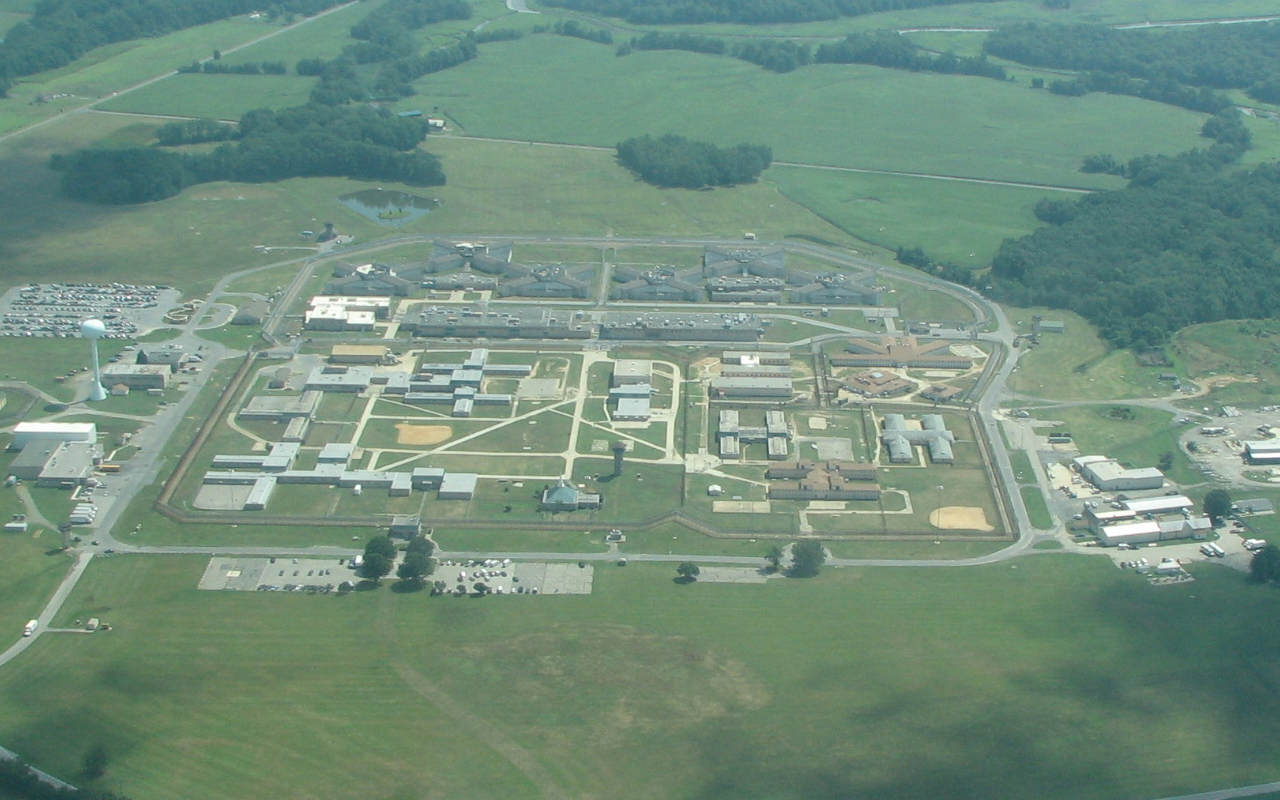
To run down the case: On February 1, 2017, inmates at James T. Vaughn Correctional in C Building took over the building to demand modest improvements to their living conditions, including better food and education resources. Since then, the state has pressed blanket charges against 18 prisoners for conspiracy to riot and riot, 2 counts of assault, 4 counts of kidnapping, and 16 of them also face murder charges. Correctional Officer Sergeant Floyd was killed that day, and his family has since received restitution from the state for $7.5 million. One of the 18 prisoners facing charges, Royal “Diamond” Downs, has since flipped to support the prosecution. The other 17 defendants have refused to snitch and are contesting the charges in solidarity with one another.

On Monday, October 22, the trial began with opening statements. The state attempts to described how three guards were attacked with a mop wringer and and held hostage in a supply closet. The state admitted they have no surveillance footage of the uprising, no DNA or forensic evidence, and that their case would rely largely on snitch testimony and radio recordings which were extremely difficult to understand when played in court.

The prosecution alleges Jarreau Ayers’ involvement based on a phone call made on January 31, 2017 in which he said “something big is going to happen”. The allegations go further to say he attacked a guard and “gave orders”. Of Deric Forney, the state alleges only in passing that he “assaulted officers.” The state alleges that Dwayne Staats was involved with hostage negotiations over the radio. Snitch testimony is also expected to claim Staats was seen with a ‘shank’ (a homemade knife). The state claims that Roman Shankaras is the alleged “mastermind” and “shot caller” of the uprising. The basis for this is a (contested) letter he wrote after the incident to Royal Downs; the state admits that Shankaras “didn’t assault anyone.”

Representing himself, Dwayne Staats emphasized in his opening statement that the government has no direct evidence of guilt, and cannot prove guilt beyond a reasonable doubt. Contesting state witnesses’ claims, Staats said: “They begging the DA for freedom, but the only thing they’re willing to sacrifice is the freedom of others.” Staats noted that the case against him was based on “falsifications, confabulations, exaggerations.” He warned jurors about the “collage of misinformation that’s going to be presented to you” and that prosecutors are “going to bombard you with inconsistencies and contradictions.”

In his opening statement, defendant Jarreau Ayers, also representing himself, refuted the state’s incorrect claims about his whereabouts that day. He pointed out the lack of credibility of prisoners who would “lie to make a deal.” Ayers told the jury to think outside of “social conformity” that pressures people to “choose the side of the state. […] I’m’a expose that they can’t just pick & choose who the bad guys are.” Ayers also challenged the institution itself: “The state carries the illusion of prestige and I respectfully decline to acknowledge it.” He reminded the jury to see through this “level of prestige where I can just show you something because I’m the state…don’t allow the magnifying glass or the lights being so bright distract you from what is right.”

The two lawyers were not quite as much in solidarity with clients. They did not challenge the grounds of the charges. Instead they argued that their respective clients are not guilty because of reasonable doubt. Jason Antoine’s opening statement (representing Roman Shankaras), which went into exhaustive detail contesting the prosecution’s statements, demonstrated major overall gaps in the prosecution’s case. Shankaras’ defense pointed out he was either in the rec yard or in his cell during all the violence; he did not participate. The defense also pointed out the presence of a security camera that could have captured Shankaras’ presence in the rec yard while the prison takeover happened inside. The state claims no video exists because their cameras can only work in one location at once. According to his defense attorney, Roman Shankaras is being charged because “he will not snitch but he is a witness.”

Ben Gifford (representing Deric Forney) gave an in-depth refresher on reasonable doubt, directed to the jury in his opening statement. This solidified the notion that the state will not be able to provide enough evidence to decisively prove any of the defendants’ guilt, and challenged the prosecution’s attempted strategy of finding certain defendants, such as Forney, guilty by association.

State witnesses this week included:

  • Sergeant Weaver, state police forensic investigator who helped prepare reports for identifying suspects for Floyd’s death
  • Delaware State Police Corporal Roger Cresto, homicide unit crime scene investigator
  • Winslow Smith, the first hostage to be released during negotiations
  • Joshua Wilkinson, the other guard to be held hostage and released
  • Jordan Peters, a guard who was on “outside patrol” in a vehicle before responding to Building C after the uprising began
  • Lieutenant Sennett
  • The Forensic Nurse Examiner who examined CO Joshua Wilkinson
  • Robert Ferguson, the guard assigned to Building C where the uprising took place
  • Brett Smith, crisis negotiator with CERT
  • Patricia May, the counselor assigned to Building C who was taken hostage but not harmed by prisoners

None of the above witnesses could identify any prisoners involved, or if they tried to, it was contradicted by transcripts from their interviews with investigators right after the event.

State witnesses admitted they do not know:

  • What ‘shanks’ were used to kill Sgt. Floyd
  • Who used these shanks
  • Who made the shanks
  • When or where the shanks were made
  • Where the materials used to make the shanks came from

What has been consistent throughout all the testimony is just how bad conditions are at James T. Vaughn. While this shouldn’t be a surprise, we should be paying attention to these details.

1. Every staff member at the prison is also a CO, though not all are active in that role. Stationary Fireman Matthew McCall testified that overtime is abundant that way, and bragged that he participated in plenty of “shakedowns”, when COs forcibly go through an inmates belongings and take whatever they want as contraband.

2. McCall also testified to the physical state of C Building as “fallen in disrepair…a long time ago”, which was why they were there that morning, to add chemicals to the water boiler which had developed leaks. Photographs of the basement depicted a run down space with pools of water on the floor.

3. The inmate treatment was repeatedly described as “terrible” but at the same time normalized. For example, CO Owen Hammond testified that when the SFs first exited the basement on to the first floor, “we saw a busted mop ringer and blood on the floor but didn’t think much of it and continued on our way.” Then SF Justin Tuxford testified that at first he thought the person locked in the supply closet was an inmate because sometimes you had to “use proper force, if all you have is a supply closet.” (That person turned out to be Sergeant Floyd.) The prisoners had released a list of demands, which McCall testified as “weird,” including “education and stuff like that.” The nonchalance of prison staff statements are only matched by the crassness of what they mean.

4. Prisoners released 22 demands, and tried to get those out to the media and Governor Carney, but prison staff completely and effectively ignored them with militarized suppression. The demands included better treatment with dignity, better food, access to programs, education, contact with family and friends, a pay increase to at least $5 a month (they were not being paid anything for their work, effectively providing slave labor), fair and impartial disciplinary hearings, and a grievance process, as well as 13 others.

On Friday morning, we heard the first prisoner witness called by the state, Anthony Morrow. He had since been transferred to another facility, but not until after being held in the solitary housing unit (SHU) for a year and 5 days following the Vaughn uprising. The state opened for him by playing a recording of a phone call to his fiancé that he on when the uprising started. He described that Floyd is getting “stabbed up” and she asks, babe, whyyy? Morrow said, you don’t understand — “these cops be oppressive, spraying them, beatin them up, talkin about they parents.” The state repeatedly asked if Morrow saw anyone, and if he could identify any of the inmates involved, but he repeatedly denied it. Morrow had briefly seen Floyd getting mob rushed, but could not identify anyone involved in the assault. More specifically, Morrow called defendant Deric Forney his “brother” — they had done Bible study together and lived across from one another — and, noting that he “would recognize [Forney] anywhere,” testified that Forney had not been present at the scene of assault.

On Friday afternoon, state “star witness” Royal Downs began his testimony, which was vague and somewhat inconsistent. Downs’s story so far is that other prisoners kept coming to him to discuss, at first, a peaceful protest, and then a building takeover, and that he was opposed to it from the beginning. He identified Ayers and Shankaras as the prisoners who told him the night before that the building takeover was happening, and testified that Ayers, Shankaras, Staats, along with Pedro Chairez, Lawrence Michaels, and “a couple others, I don’t remember” were the ones who planned the uprising.

By the end of Friday afternoon, tensions appeared high between Jason Antoine (counsel for Roman Shankaras) and Judge Carpenter, as well as between Antoine and the other defense counsel and between Antoine and Shankaras himself. On Monday, court was canceled due to “legal issues,” and on Tuesday the judge announced that Shankaras’s trial was being rescheduled due to issues with his attorney.

So far, no evidence beyond cooperating witness testimony – no video, no DNA or forensics – directly ties any defendant to Floyd’s killing. All prisoner witnesses were all considered potential suspects at one time and the defense has already pointed out their motivations to offer dishonest testimony to cut a deal with the state.

It is also plausible that CO witnesses in the Vaughn Uprising case have been colluding to change their testimony to back each other up, since cross-examination showed this week that the state has not tried to prevent them from doing so. But the fact that the state has no hard evidence against these Vaughn 17 defendants does not mean that they will not be successful in manipulating the trial as though they have a case.

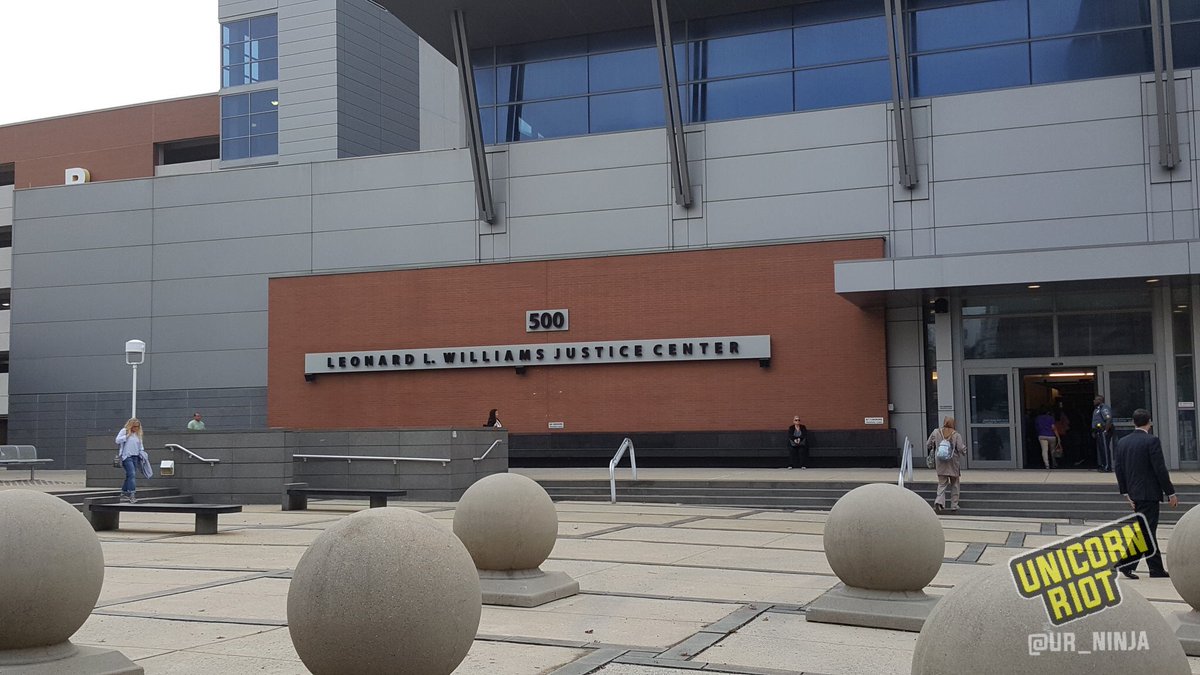
Court is ongoing every weekday from 10am-5pm in Courtroom 8B at 500 N King St, Wilmington, DE. More court support is welcome!

Support the Vaughn 17

First Vaughn Prison Revolt Trial Begins

from Unicorn Riot

Wilmington, DE – On February 1, 2017, a prisoner uprising took place at the James T. Vaughn Correctional Center in Smyrna, Delaware. Over 100 inmates at the maximum security prison seized control of ‘Building C’ at the state Department of Corrections complex, taking several prison employees hostage in an uprising that would last almost 24 hours. Those involved in the uprising demanded better living conditions, access to education, transparency in use of prison funds, and an end to inconsistent enforcement of prison policies. Now, more than a year and a half after the historic uprising, four defendants – Jarreau Ayers, Derric Forney, Dwayne Staats, and Roman Shankaras – are the first to face trial after refusing plea deals offered by prosecutors.

After police retook Building C on February 2, 2017, 18 prisoners were eventually indicted on felony counts of riot, conspiracy, first degree kidnapping, first degree assault, and first degree murder. Since one of the 18 – Royal ‘Diamond’ Downs – has turned state’s evidence, supporters are referring to the Vaughn uprising defendants as the “Smyrna 17” (The James T. Vaughn Correctional Center is in Smyrna, Delaware.) Apart from Ayers, Forney, Staats, and Shankaras, four other groups of prisoners face trials in between November 2018 and February 2019.

All four defendants seemed confident and prepared in court, sitting upright and paying close attention during opening arguments on Monday. Ayers and Staats are both representing themselves pro se and appeared eager to finally confront the charges against them. The four defendants, all black men, were closely guarded in the courtroom at all times by at least 9 Delaware Department of Corrections officers, all of whom appeared to be white.

18 jurors  – 3 white men, 10 white women, 3 black men, & 2 black women – were seated around 10 AM in Judge William Carpenter’s courtroom on the 8th floor of the Leonard C Williams Justice Center. After the jurors were sworn in, opening arguments for the state of Delaware were made by Assistant Attorney General Nichole Warner. Warner called February 1, 2017, “a day unlike any other” and told jurors that “suddenly and violently, a group of inmates took the building over.”

In language echoing the failed federal rioting conspiracy case against protesters arrested at Trump’s inauguration, Assistant Attorney General Nichole Warner told jurors that prisoners who may have only intended to organize civil disobedience in their facility were still ultimately responsible for the death of Corrections Officer Steven Floyd:

“All people associated with the original crime can be held liable…even if there was no agreement [to commit murder].” – Assistant Delaware Attorney General Nichole Warner

Assistant Attorney General Warner’s opening argument primarily focused on building the basic narrative of events that will be referred to by witnesses throughout the trial. She described how on February 1, 2017, when corrections officers (COs) called for inmates to come inside from the recreation yard to take showers, several masked prisoners attacked the COs with a mop wringer, subduing them and taking them hostage, restraining them with their own handcuffs.

Sergeant Steven Floyd, who would later be killed, was known to be verbally abusive towards inmates, according to defense lawyer Jason Antoine, who said he was known for yelling at prisoners in their cells. During the takeover, Floyd was initially detained by prisoners in a mop closet, but was later moved to the Sergeant’s office, where investigators would later find his corpse.

Two other COs, Winslow Smith and Joshua Wilkinson, were also taken hostage and reportedly beaten and injured, but survived. Smith was released during hostage negotiations, while Wilkinson was kept behind and used as a go-between during the final attempted negotiations until police retook Building C. A prison counselor was also taken hostage during the standoff but was not physically harmed.

Once the prisoners had taken control of Building C, they began negotiating over the radio for the release of the hostages. The prosecution alleges that defendant Dwayne Staats threatened to kill hostages over the radio, telling police “if you breach, they will die immediately” – a claim expected to be contested by Staats as the trial proceeds. The state played an extended sample of Department of Corrections radio chatter from the negotiations, although the recording had a severe echo effect that made it difficult to understand what was said.

The state acknowledged that they had absolutely no surveillance video footage from the prison that day. Around 2 PM on the day of the uprising, the prisoners involved in the takeover agreed to let other inmates with health conditions leave the building, with more being released later at midnight. Around 5 AM, militarized police with Delaware’s Corrections Emergency Response Team (CERT) had breached building C, extracted the remaining hostages, and began subjugating the prisoners still inside the facility.

Images shown by the prosecution during opening arguments included pictures of burnt lockers, allegedly demonstrating how prisoners were burning bloody clothes to prevent them from being used as criminal evidence, and pictures of the mop wringer that was reportedly used to assault guards during the takeover.

Assistant Attorney General Warner went on to make more specific allegations against each of the defendants. Jarreau Ayers, she said, made a phone call from inside Vaughn on January 31, the day before the uprising, in which he allegedly said “something big” was going to happen soon and asked for money to be put on his commissary. The state also claimed that one of their cooperating witnesses would testify that Ayers attacked a CO and that he was seen “giving orders” during the riot. Warner mentioned defendant Derric Forney only briefly, claiming offhand that he “assaulted officers.”

Roman Shankaras was called a “mastermind” and “shot caller” although Warner also added that “he didn’t assault anyone himself.” The case against Shankaras seems to orbit around a kite (prison letter) that he wrote to another inmate, which his lawyer claims was written under duress. Dwayne Staats was also alleged to have been seen by cooperating inmate witnesses with a shank and a radio during the uprising as well as assaulting a CO and “giving orders” to other prisoners. The prosecution plans to use letters written by Staats to claim that he took responsibility for the riot and the death of Sergeant Floyd.

After Assistant Attorney General Warner finished outlining the state’s case against the defendants, each of the defendants made their opening arguments. Jason Antoine, defense counsel for Roman Shankaras, told jurors “if you had to boil this case down to one thing… this is about dignity” and argued that Shankaras and many other prisoners had simply planned to “stand out in the yard to protest prison conditions.” He also spoke about poor living conditions in Building C at Vaughn and told jurors that “this riot had been brewing” for a long time due to “mistreatment” and “inconsistent policies.” Antoine called the Vaughn Uprising “a shock to the state of Delaware and a shock to the prison system,” pointing out that it is the first time a corrections officer has been killed in a Delaware facility.

Defense counsel for Shankaras also pointed out the presence of a security camera that could have captured Shankaras’ presence in the recreation yard while the prison takeover happened inside. He says the state responded to his request for the footage by telling him that “the camera location system only works from one location at a time.”

He also named three specific “bad apple guards” – Abigail West, and Estrada Green and Lance Green – as particularly responsible for exacerbating tensions amongst prisoners inside Building C. Antoine also pointed out that Shankaras was either out of the yard or in his cell during most of the events in question, including with Sergeant Floyd was killed. He told jurors that his client was an “outlier” to the day’s events, didn’t give orders to anyone or talk on the radio, and was being charged as retaliation for not testifying against others.

Antoine spent most of his opening statement poking various holes in the testimony expected to be heard over the next few weeks from cooperating inmate witnesses. He further alleged that cooperating witnesses had been housed together by the state at Howard Young Correctional Facility so that they could rehearse their stories together. One state’s witness he brought to the jury’s attention was a convicted pedophile; another had admitted to being a compulsive liar. At one point he called the case “garbage evidence in, garbage evidence out” and went on to mention that one prosecution witness falsely claimed that Sergeant Floyd was beheaded. Another of the state’s cooperating witnesses reportedly stole Floyd’s watch off of his wrist.

Antoine seemed to relish getting to what he told jurors was the “good part” of his opening statement, telling them “Hollywood ain’t ready for this.” He was referring to Royal Diamond Downs, the state’s “star witness” who was himself a participant in the Vaughn Uprising before flipping to testify for the prosecution in exchange for dodging the murder changes. According to Antoine, Downs is “one of the most influential people in the Delaware prison system” and sat at the top of the prison hierarchy where he could order hits by different prison gangs such as Black Guerrilla Family and Dead Man’s Inc (DMI). He further alleged that Downs essentially “ran” Vaughn Correctional Center and that he was possibly the one who ordered Sergeant Floyd to be killed during the prison uprising. Radio from the February 1, 2017 standoff, as well as a recorded February 15, 2017 phone call Downs made to his girlfriend in which he seemed to take responsibility for Sergeant Floyd’s death and express remorse.

Next to give opening statements was Dwayne Staats, representing himself. Staats said that he was “agitated” by “false allegations” against him and insisted that the state was using other prisoners’ false testimony in order to try to wrongly convict him.

Staats asked jurors to be critical of the “collage of misinformation that’s going to be presented to you” and told them prosecutors were “going to bombard you with inconsistencies and contradictions.” Staats says that prosecution witness statements say that he was in places that he wasn’t on the day of the uprising and told the jury “I didn’t wear a mask” and “I don’t have a clone that was running around.” He ended by asking jurors to remember that they had to find him not guilty if the charges against him weren’t proven beyond a reasonable doubt: “the scale is tilted my way … at this moment I’m presumed innocent.”

Next to give opening statements, and also representing himself at trial, was defendant Jarreau Ayers. Ayers criticized the state for relying on testimony from Vaughn prisoners who were willing to “lie to get a deal” and said prosecutors were trying “pick and choose evidence that fits their theory.” He told jurors “you got the right to be skeptical” about the motives of witnesses in the case – a comment to which prosecutors objected, but Judge Carpenter overruled the objection. Ayers stressed that no DNA or forensic evidence has been brought against him, and that the state’s case has to rely on witnesses.

Ayers made further comments to the jury asking them to not take the trial proceedings at face value and to resist “social conformity” that might pressure them to “choose the side of the state.”

He also spoke to what he saw as the wider significance of the trial:

“I believe that this case has the opportunity to set the tone for how people look at “beyond a reasonable doubt” in our legal system.” – Jarreau Ayers

Ayers went on to tell jurors how he had reviewed thousands of pages of legal documents to prepare for his trial and that “the only thing consistent about this case is going to be the inconsistencies and contradictions.”

Ayers showed the jury pictures of a broken mop handle, gloves, and a shank that had been used by the prosecution during their opening. “The reality of it is none of these pieces of evidence have our DNA on it or the CO’s DNA on it,” he said, asking jurors not to accept “the level of prestige where I can just show you something because I’m the state…don’t allow the magnifying glass or the lights being so bright distract you from what is right.”

Last to make an opening argument was Ben Gifford, defense counsel for Vaughn uprising defendant Derric Forney. Gifford mostly stressed that his client was presumed innocent until proven guilty, and that very little evidence at all had been presented against Forney. Forney’s lawyer also reminded jurors that each of the four defendants were entitled to be tried individually and that they shouldn’t let the state try to paint them as guilty by association with each other.

After opening arguments ended and the court took a lunch recess, trial resumed with the jurors hearing from the state’s two first witnesses, two investigators, tasked with analyzing evidence from Building C after police had put down the uprising. They shared an extensive list of details about evidence recovered after the fact. Testimony by Delaware State Police Corporal Roger Cresto, who took photographs of Building C on February 2, 2017 after the police raid, had not finished by the time Judge Carpenter decided to end court for the day. His testimony is scheduled to resume in front of the jury at 10 AM on Tuesday, October 23.

Follow Unicorn Riot on Twitter for the most up-to-date information from inside the trial (we can’t tweet from court but post what we can on breaks!)

Title image credit: trconrad2001 / Flickr / Wikimedia Commons


Please consider a tax-deductible donation to help sustain our horizontally-organized, non-profit media organization:

supportourworknew

Report-back on the Ordination

from Friendly Fire Collective

This past weekend our Friendly Fire community celebrated our comrade and friend Matti, as well as their gifts and ministry.

As one of the initial members of the collective, Matti was one of the main organizers of the May Day retreat. They cooked, cleaned, led workshops and prayer meetings, provided pastoral and spiritual care, and went about it all with bliss. When things kept falling apart during our retreat, Matti fearlessly transformed every moment of chaos into grace. Their profound faith has grounded our community in an outrageous sense of love and magic.

Though situated across the so-called US, they have continually offered their anointing and spiritual gifts to the Philly base and the wider Friendly Fire community through tarot readings, intercession, prophecy, and more practical, material support, such as writing for our newsletter.

This weekend, our community surrounded Matti to recognize the Spirit’s ordination of Matti as a seer, prophet, and minister of insurrection. We shared silence and out of that stillness we prayed and prophesied for over an hour, speaking blessings over our community and Matti.

Some friends of our community traveled from out of state in order to celebrate, so as soon as the ordination was done we feasted and celebrated.

Thanks to all our friends who showed up, especially those who traveled quite a distance! Your presence was felt and appreciated.

Thanks, also, to the friends who were willing to endure the marathon of TLC’s finest reality TV show 90 Day Fiancé. We did that, and we did it together.

Rebellion and Possibility: Voices in the Anti-ICE Struggle Vol. II

from It’s Going Down


The Radical Education Department (RED) returns with another collection of texts from the Abolish ICE movement.

As ICE’s brutality continues to shatter lives, we continue to document the struggle to abolish the institution.

We’ve compiled more stories of radical struggle against ICE, the border patrol, and the police; documenting the different tactics, successes, and philosophies from around the country.

We would like to thank the all of the contributors for each article that we’ve compiled, and the websites that originally published those writings and from which they were borrowed.

Again, this volume, like the first, is only one very limited snapshot of the vast anti-ICE uprising, which developed powerful expressions in many more than the few cities represented here.

Volume 2 can be found here: https://radicaleducationdepartment.com/zines/

Vaughn 17 Court Support

from Twitter
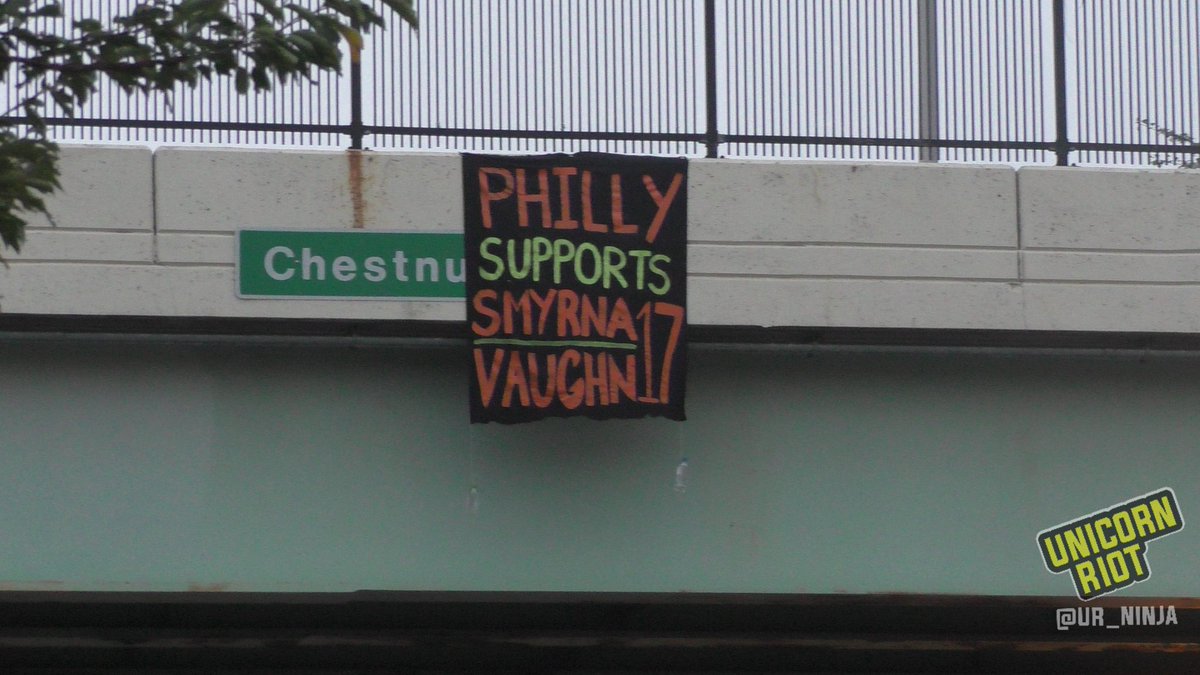
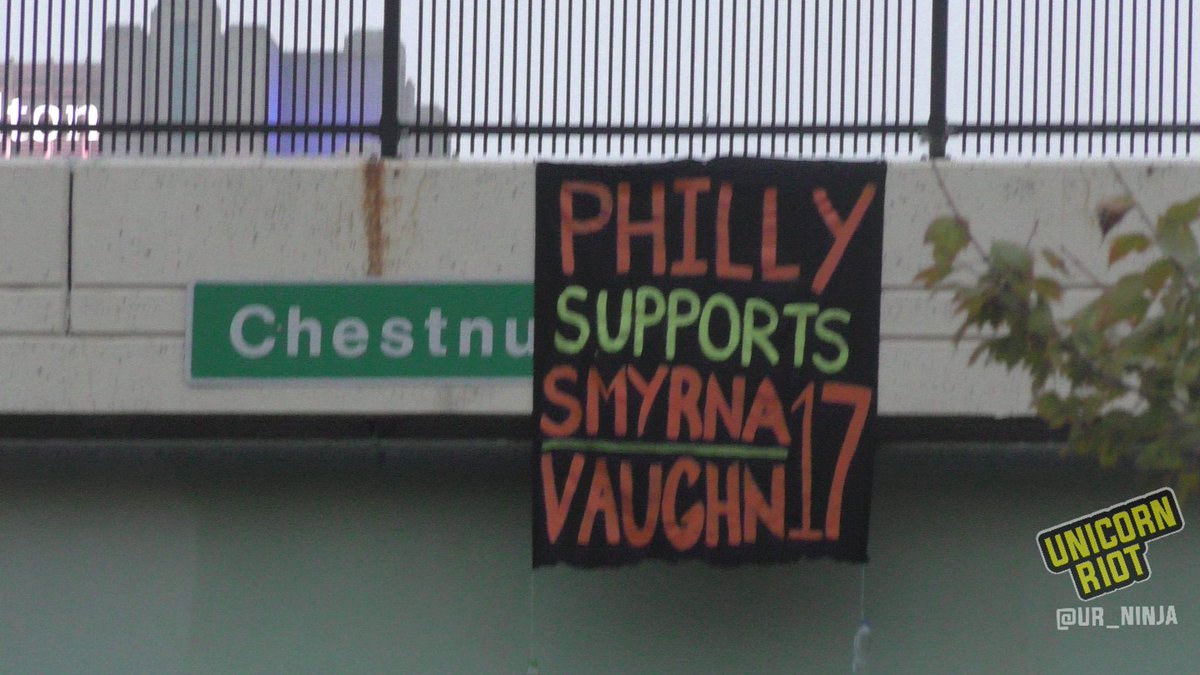
Banner supporting Vaughn Uprising prisoners seen over Christopher Columbus Blvd during morning commute in Philadelphia, PA. Participants in Feb 2017 uprising at Vaughn Correctional Center in Delaware face trials this month thru next yr. Jury selection for 1st trial starts today


On February 1, 2017, prisoners revolted & took over Building C at the maximum security prison in Smyrna, Delaware. 4 prison employees were taken hostage & one died after a police raid retook the facility. Prisoners’ demands included better living conditions & access to educationPrisoners involved in the Vaughn Uprising also cited Trump’s inauguration as one of the reasons for their revolt – they believed the new presidency would inevitably embolden prison officials, whose unions endorsed Trump, to intensify neglect & brutality towards incarcerated ppl

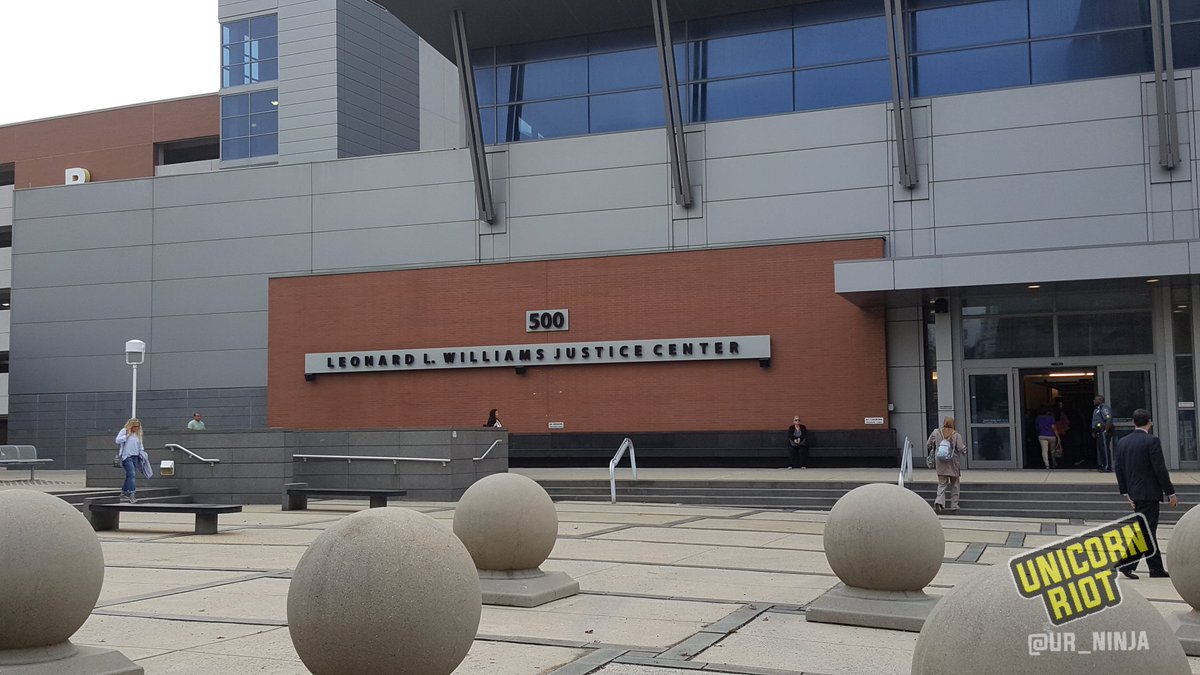
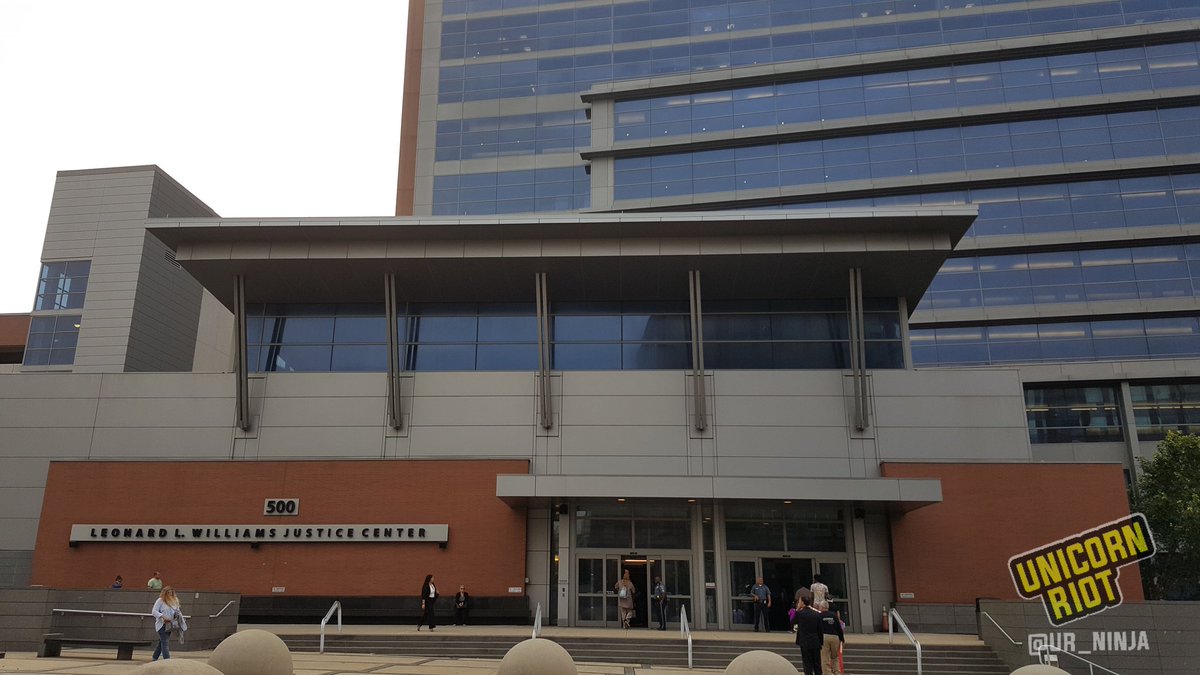
Courthouse doors just opened here in Wilmington, Delaware where jury selection for the first trial is scheduled to begin today. Four of the prisoners involved in the uprising – Jarreau Akers, Dwayne Staats, Ramon Shankaras and Deric Forney – make up the 1st trial group


<

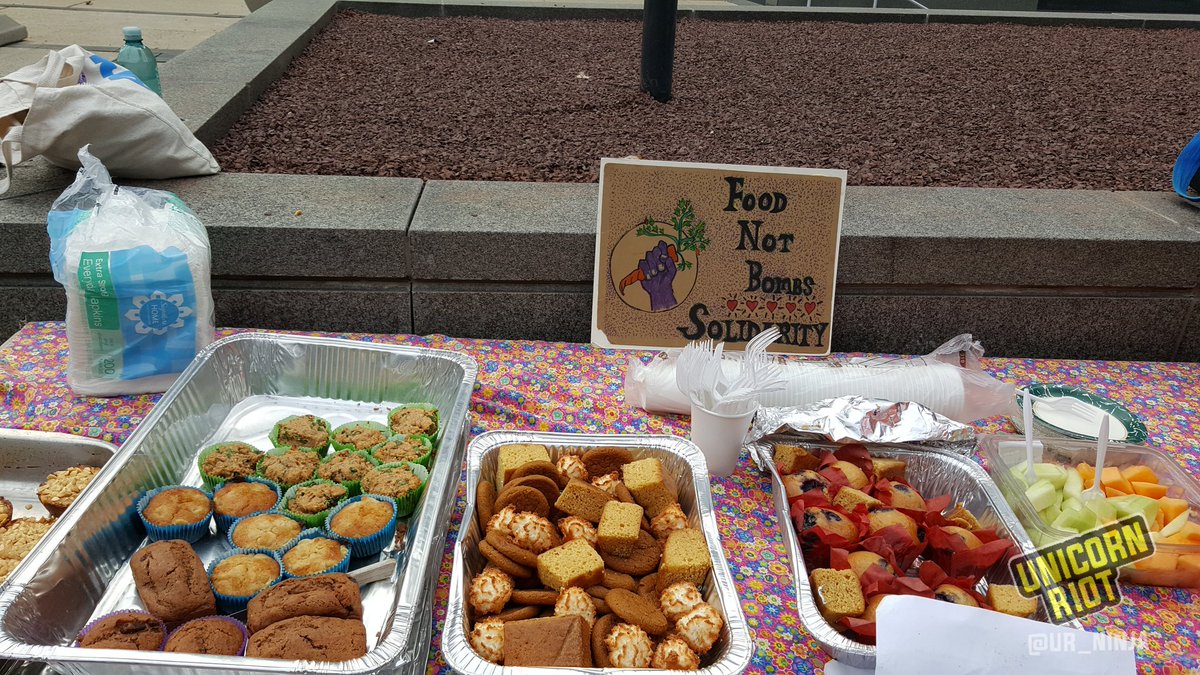
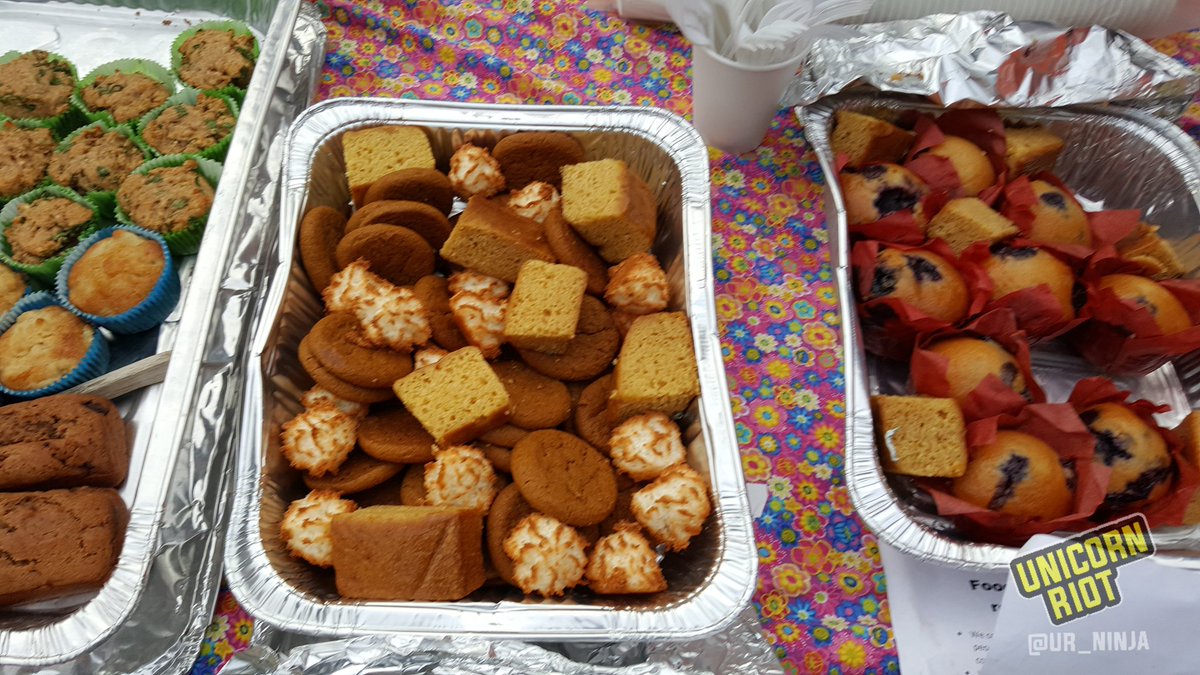
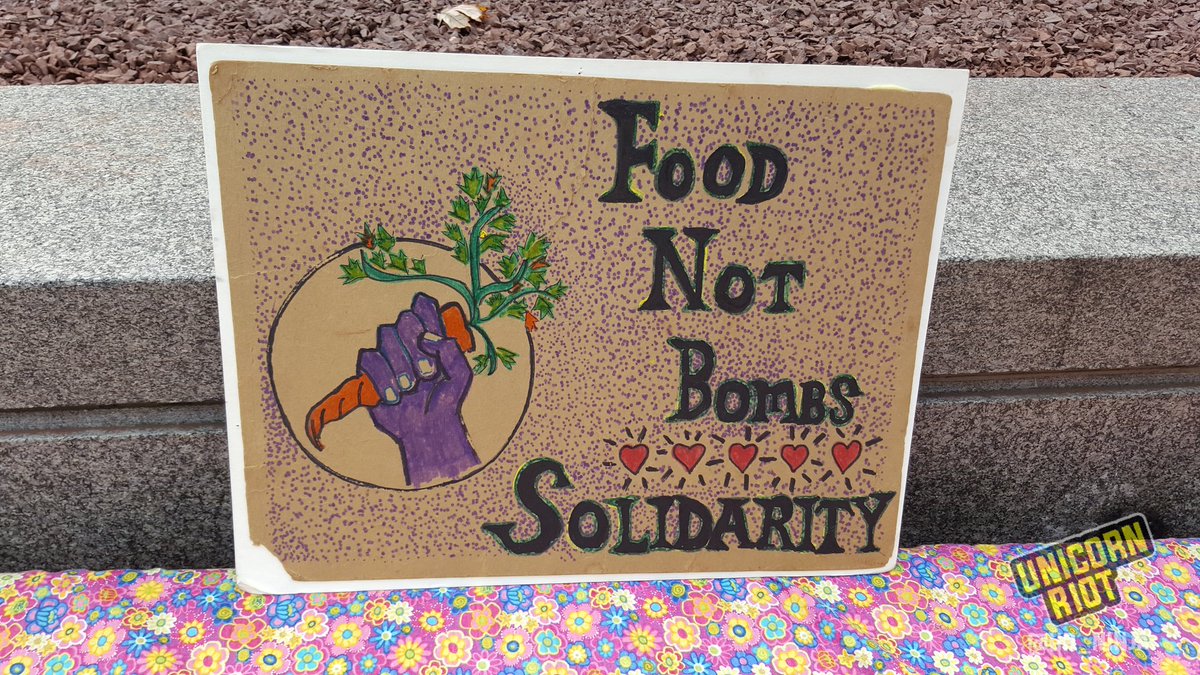
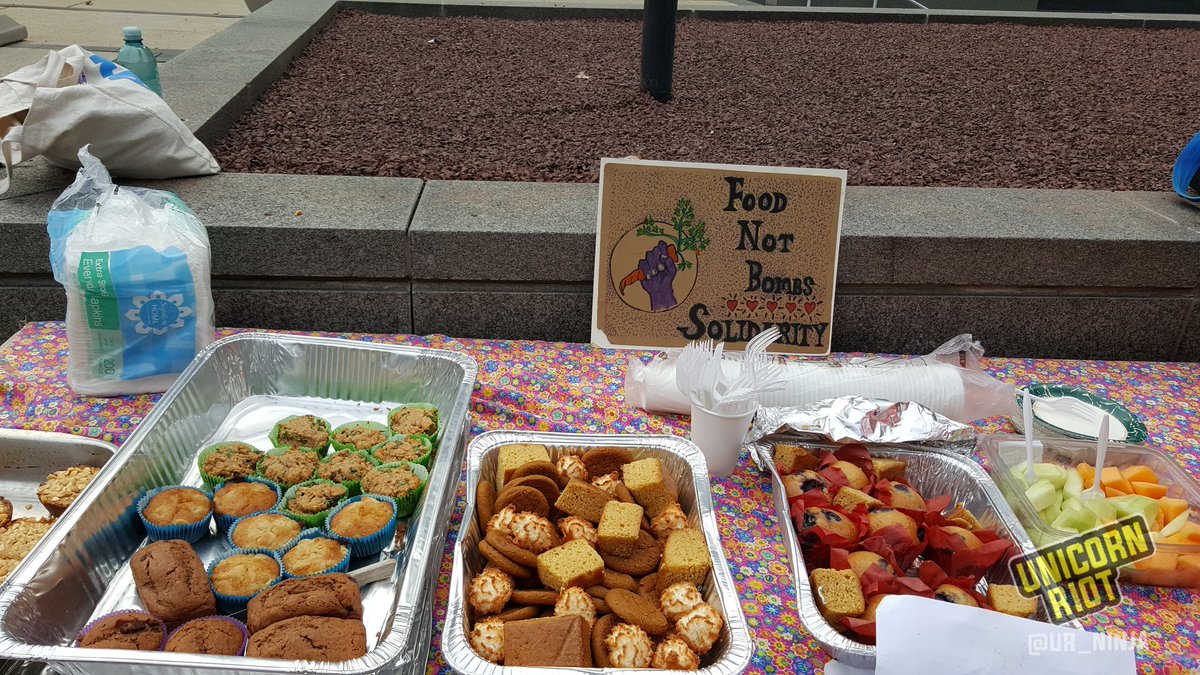
A Food Not Bombs chapter is providing free breakfast and tea to approximately a dozen supporters of the who have gathered outside the courthouse.


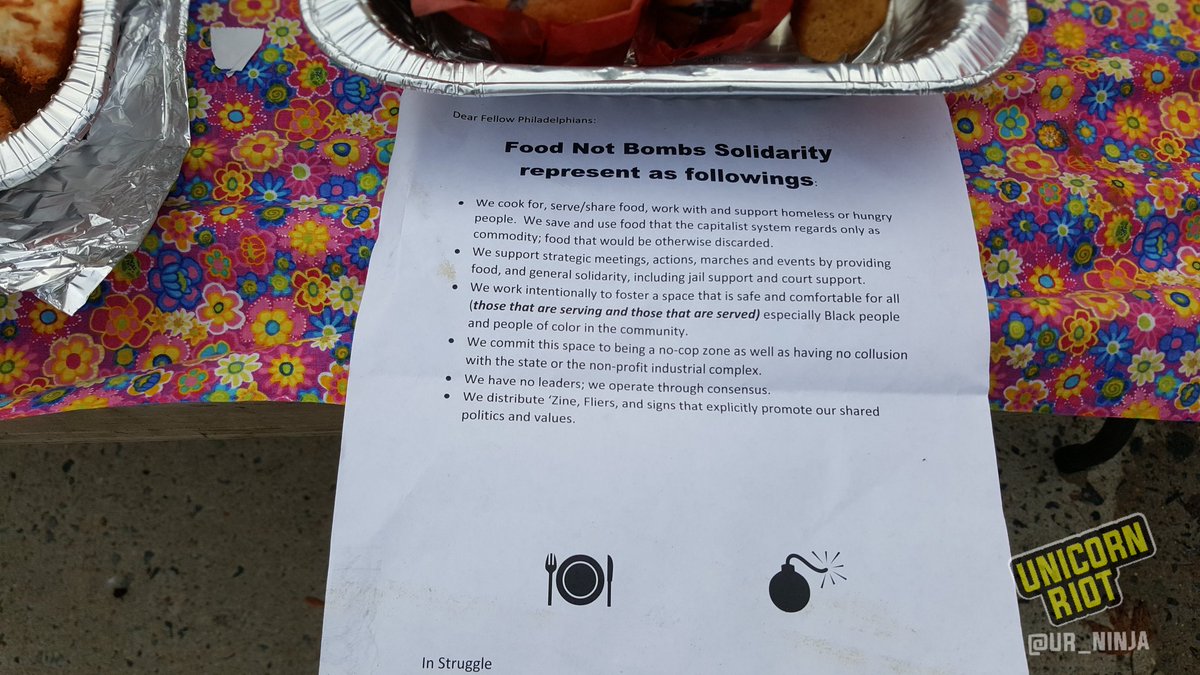
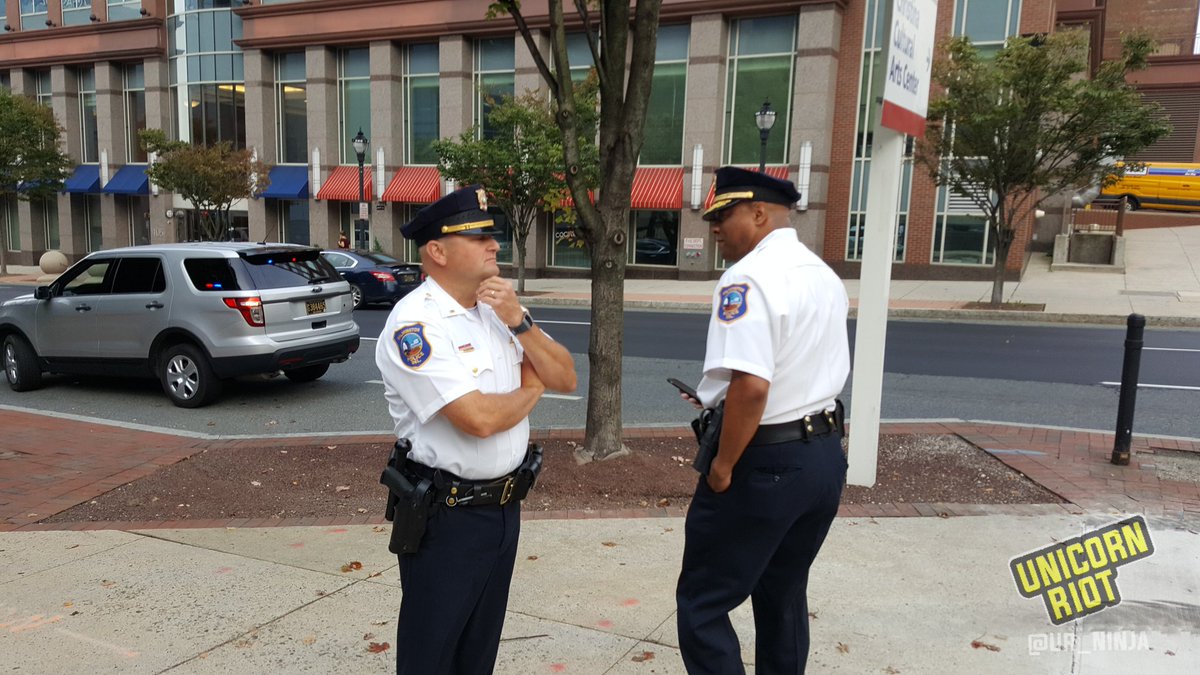
Wilmington Police have arrived and are telling Food Not Bombs they can’t serve food on the sidewalk by court without a permit. supporters told police a recent federal court ruling means Food Not Bombs is protected First Amendment speech that doesn’t need a permit


Police seem to have backed off ordering the Food Not Bombs table to leave the area by the Wilmington, DE courthouse after reportedly checking with their law department- the officer in charge just apologized to the people that minutes ago he had been ordering to leave.

We have been told that jury selection in the first trial is closed to the public, so we are unable to report from inside the courtroom today. The first batch of 4 defendants from the February 1, 2017 prison uprising in Smyrna, Delaware will begin trial on October 22.

10/2 Anti-Trump Protest (and Gritty)

from Friendly Fire Collective

Point Blur_Oct022018_171023

Yesterday’s anti-Trump protest was organized and put together as soon as news came out that Trump was coming to Philly to speak. It was short notice, but several small protests were organized and eventually converged in a rally in front of the conference center that Trump was speaking in. Though a number of the protesters were centrists and liberals, the rhetoric of the rally was radical, tying together the many issues of this current administration with broader systems of policing, capitalism, imperialism, sexism, and white supremacy/anti-blackness.

Point Blur_Oct032018_201805.jpg

Many had reservations about this protest – about the messaging and the potential of violence and arrest – but we couldn’t not just not show up when Trump was in town.  Thankfully, nobody was arrested, and this was one of the few actions in quite awhile where police didn’t escalate the situation with violence. This action, with its moments of militant language, was quite positive, even joyful. As we chanted, “out of the sidewalks, into the streets,” some folks passing by excitedly joined. Flyers with upcoming actions and agit-prop were handed out.

42795940_2129588257052197_7844764779825594368_n

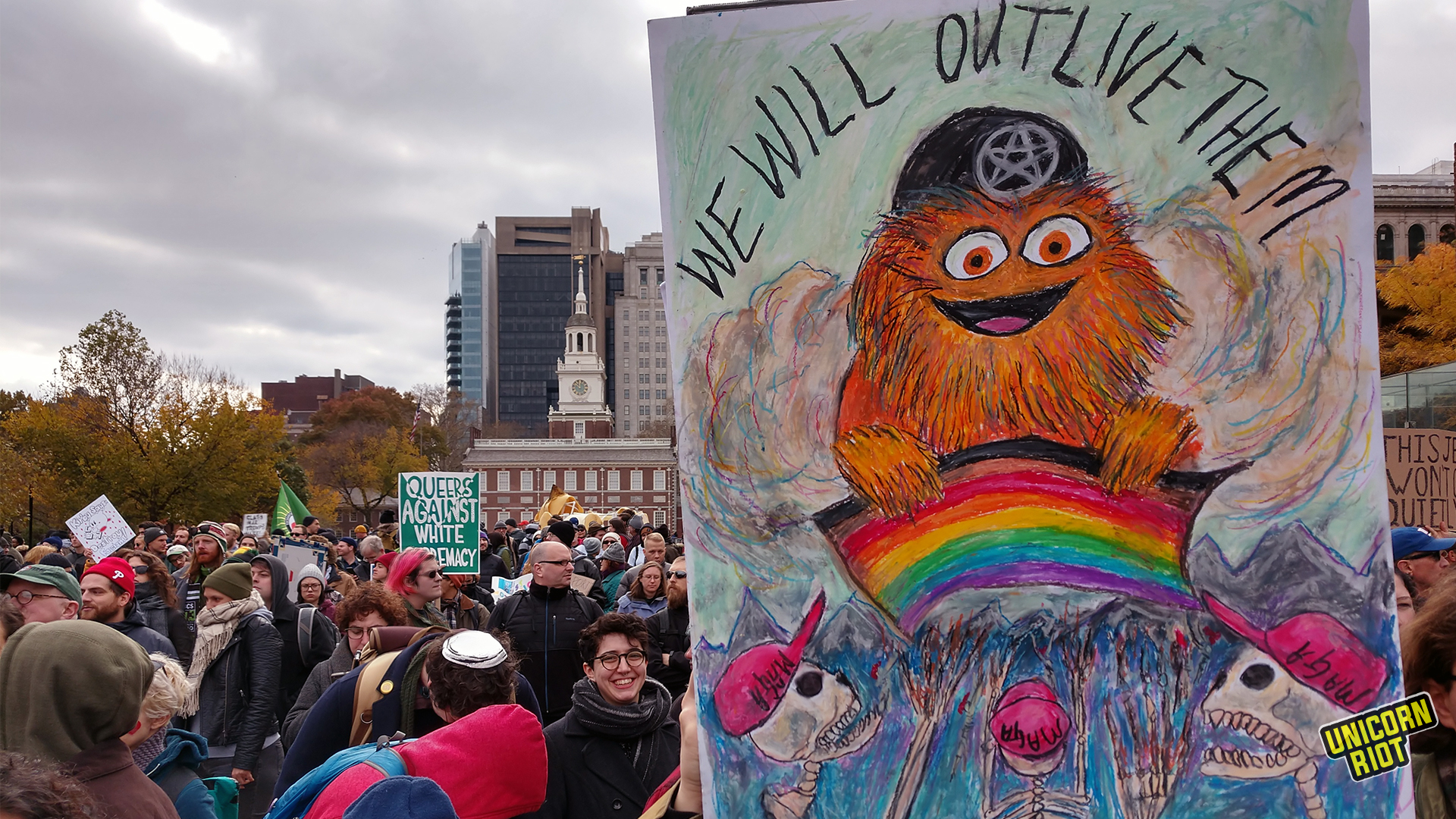
Of course, the new Flyers mascot Gritty was very present – on our banners, signs, and hearts. Somehow, in the past week, the leftists and anti-fascists of Philly have claimed Gritty as their own. And as hilarious and absurd as that is, it actually makes some sense. As George Ciccariello-Maher put it, “Philadelphia is an underdog city. That really impacts and runs through a lot of the politics, particularly the sports spirit throughout the city. So when you see the launch of this mascot Gritty, who is by all accounts a sort of hideous monster, the response from an underdog city is to say, ‘yeah, but he’s our hideous monster and if you don’t love him then fuck you.’

All that to say, Gritty is basically a queer anti-fascist communist icon. Gritty’s revolution is the People’s revolution. Long live Gritty.

Solidarity and Healing in the Revolutionary Movement

from Friendly Fire Collective

Header-768x576.jpg

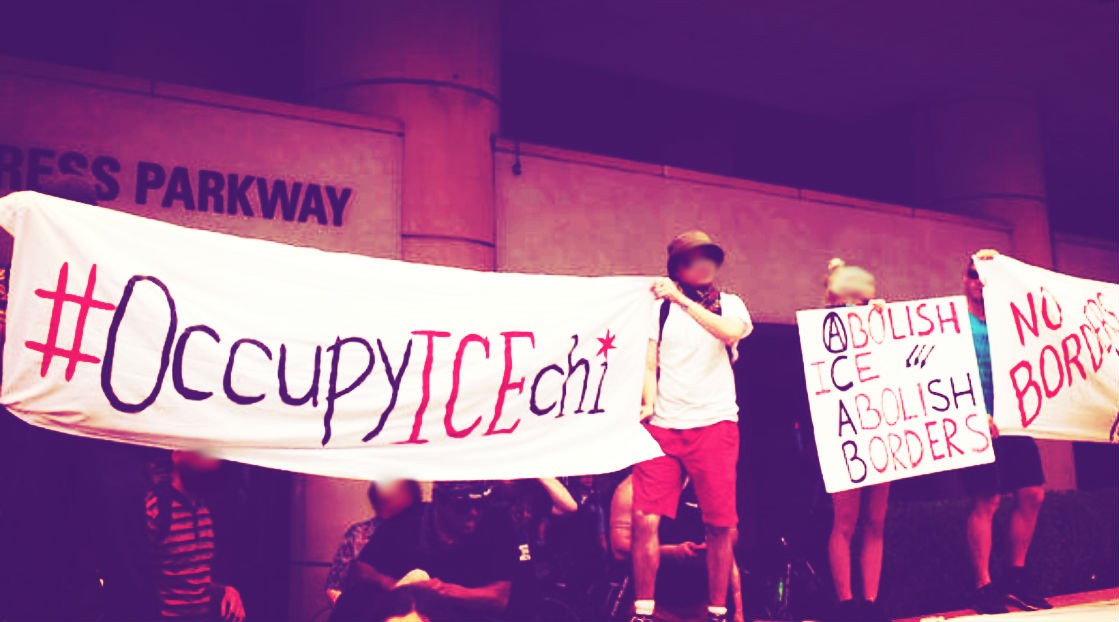
On a rainy Sunday afternoon in early September we came together to reflect on the trauma that we experienced at the hands of the State this summer (and in general). All of us have been involved in the turbulent street protests that happened over the summer and so far this fall, including the Occupy ICE encampments, the Anti-Blue Lives Matter march, actions in solidarity with the prison strike, etc. Although we all knew each other–some before this summer, others as a result of this summer–there was one person, experienced with therapeutic practice, who most of us met for the first time. This person facilitated the discussion and did a great job doing so. It’s important to have people with this kind of expertise.

1-3-1-1-3-1-1-1-768x509.jpg
Besides talking about and processing our personal experiences with state violence, we also talked about how to foster a political culture that prioritizes mental health care alongside other kinds of work–legal, medical, food, study, writing, research, agitation, street tactics, intelligence gathering, etc. To this end, there should be a collective of people with skills in the mental health field who make their expertise available to those experiencing post-traumatic stress. And this collective should not just be providing their skills, but helping people develop these skills themselves, so that the skills can generalize. We talked about how at a leftist camp for children this summer, for example, there was the concept of the Care Commune, in which caring for each other was meant to be part of everyday camp life, which was primarily devoted to intense theoretical discussion and debate. This included collectivized childcare, artistic activities, meditation sessions, live action role playing, a talent show, and a general spirit of the Care Commune.

It’s crucial to cultivate a space where people are encouraged to be intentionally vulnerable and to reflect on state violence in a freely associative manner. It wasn’t until some of us took part in this meeting that we even began to think about the trauma we had experienced, which we tend to repress and disassociate from. One person didn’t even realize that they had had a panic attack at a protest earlier that week, until they started to share what they were feeling.

Regularly checking in with each other before, during, and after actions, not only about mental health, but also to consider the effectiveness of our strategy and tactics, is all connected. Mental health shouldn’t be an afterthought, but a central part of what we do as revolutionaries. A revolutionary movement will inevitably experience violence and trauma from the police, prison guards, and other armed agents of Capital. If such a movement is to succeed, it will need to address and process the question of trauma and the mental-health problems that arise from it, simultaneously as it challenges state-power.

So where do we go from here?

Here are some suggestions:

  1. This group should meet regularly to engage in such a practice and open up homes for meals/social gatherings not necessarily centered around an action or specific political goal.
  2. Hangouts/check ins before and after actions. Establish post demo space for anyone not wanting to be alone.
  3. Probe personal connections for community care resources in effort to offer them to people coping with mental/physical distress related to political actions.
  4. Reach out to elders who have experienced state violence in order to learn skills and to normalize trauma affects in relation to state violence.

Let us work together to begin this work of Liberation in ourselves and in our communities!
Let us hold our comrades close! A new world is possible!
Solidarity – and healing – forever!

Labor Day Noise Demonstration Report

Submission

Last night’s noise demonstration was fun and exciting! It went pretty well for most of its duration, though there were some moments of confusion and miscommunication that I think could be avoided in the future. I want to go over how things went and then address some successes, and problems I’d like to see us overcome as we continue to take to the streets together.

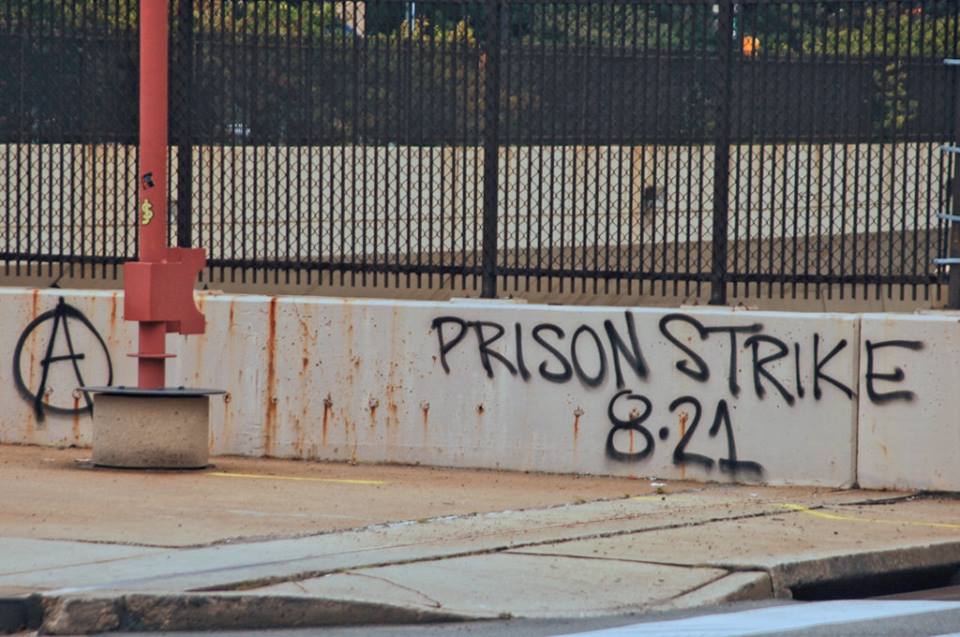
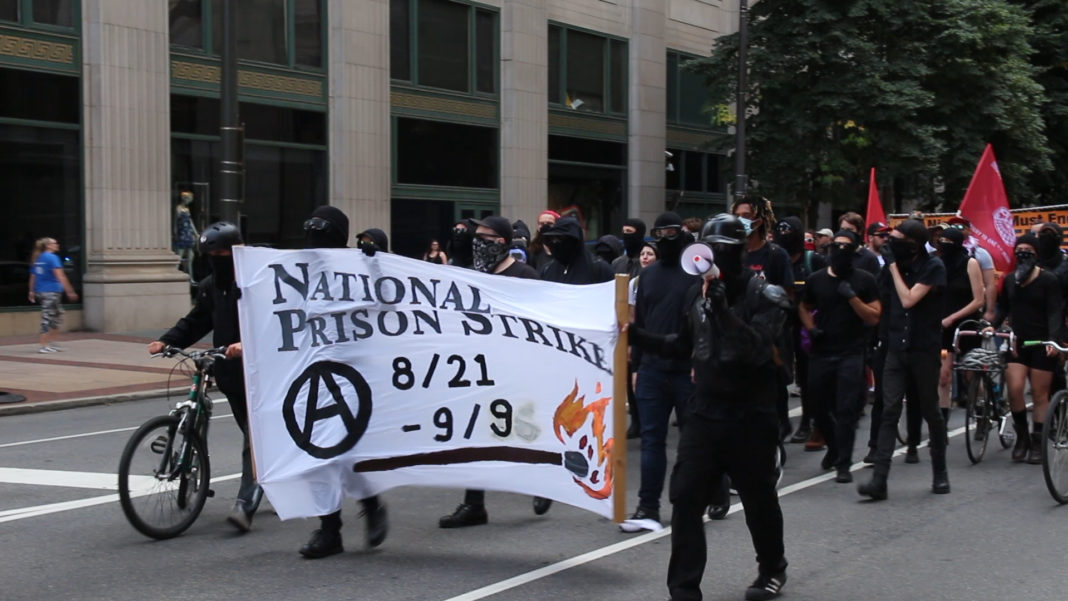
I met with some companions at a nearby location and around 8PM we marched together to the Federal Detention Center at 6th and Arch. Most of us were dressed in black with our faces covered. As we walked over, graffiti was painted and fliers about the strike were thrown into the air, the quiet streets were ours. Once we arrived at the prison people began shouting, shooting fireworks, throwing firecrackers, and making a bunch of noise together. Over the next fifteen minutes more people arrived and joined in, sharing water, whistles, and adding chants to the ruckus with a megaphone. Some people stood in the street blocking all traffic going past the prison, others gave fliers to this captive audience. People locked inside the prison shone lights and waved at us through the windows.

The police arrived after some time, but initially could do very little. There were only a couple cops and they protested that people were lighting fireworks and blocking the street but couldn’t so much about it. They were able to open one lane of traffic as more police arrived to back them up. By this time it was clear that the prisoners had seen us and that the police presense was growing, some police on bikes appeared. A decent time to make a dignified exit; we had broken the isolation of the prison walls, made clear our solidarity, and expressed a disgust for the police and their prisons.

We took to the street and went south to Market street with police moving alongside and behind us. We went around the block, against traffic, and circled back past the prison going west on Arch street. Here some of the march slowed down to make some more noise, while many of the masked comrades began to leave. It seemed to me that the feeling of the march then was a general leaning toward dispersal, though I cannot be sure. The cowardly police took advantage of the fact that many of the masked marchers were further away to attack those who had not yet left. They used their bikes and metal clubs to beat demonstrators and made two arrests, including a thirteen year old. After this it seemed like the demonstration was pretty much over. People went home or kept track of the arrested (both of whom are out – one with a citation, one with charges – at the time of this writing).

In many ways this demonstration was a success. The isolation of the prison was broken temporarily, news of the strike was communicated, the police were not able to control the rowdy energy of the crowd, and rebellion and freedom were celebrated with a festive enthusiasm. We were able to gather and move together under the police’s radar, it’s clear they were not prepared for a demonstration. A practice of sharing was present within the demonstration to a degree. In the longer term; tactics and ideas that during the 2016 strike seemed unusual and limited to a small amount of people have spread! The use of masks, fireworks, moving against the direction of traffic, and the creation of temporary barricades to slow police advances have become more common. Though these never spread as fast or wide as we would like, we can take a moment to appreciate the contrast between this strike and the 2016 one.

The arrests from last night might not have been preventable, we can’t know such things. What we do know is we can always strive to learn and to improve. We can open channels of communication before an action, especially one that hasn’t caught the police’s attention yet. Imagine if we had all met up in a quiet place to have a quick discussion on dispersal, legal support, and sharing supplies, before walking to the prison together. We could have some idea of what to expect of each other and the security of all masking off camera and arriving together. It might not have prevented the police from doing their job, some people would have shown up late and missed it, but it certainly wouldn’t have set us back by much. The same can be said to a lesser degree for communication once a demonstration has started moving, more easily within the bloc and probably with more difficulty beyond the bloc. To me these kinds of communications feel like they can increase our capacity, make more things possible, and keep us safer from the police. I know there are reasons we’re shy and secretive, that there is a lot of distrust, and that speaking to each other can be difficult, but let’s challenge ourselves!
How can we better communicate and look out for each other without compromising our security? How can we intensify our struggle? How can we spread it? What do we imagine is im/possible and how can we make it our reality?

Solidarity with the comrades beaten and arrested!
Fuck the police!
Strength and solidarity to the striking prisoners!
Fire to the prisons!

Noise Demonstration in Solidarity with Prison Strike

from Twitter

Tonight in , a noise demonstration was held outside the Federal Detention Center at 8th & Arch in solidarity with the national . As protesters marched away from the facility, made two arrests & hit protesters & journalists with metal batons

Roundhouse Prayer Meeting Reportback

from Friendly Fire Collective

DlxdZYvX0AEp5ko.jpg large.jpg

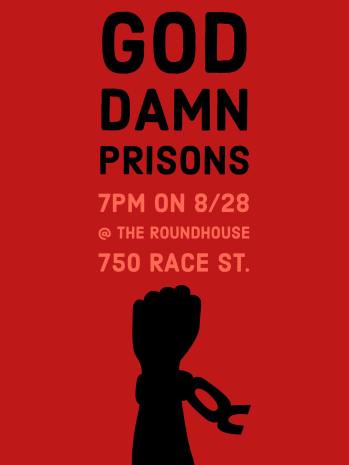
The Friendly Fire Collective, a community of radical and abolitionist Christians in Philadelphia, meet weekly for prayer and fellowship. This past Tuesday (8/28) we had our meeting right in front of the Philadelphia Police Department Headquarters, also known as the Roundhouse.

40047007_1940834089551133_3786750893970423808_n
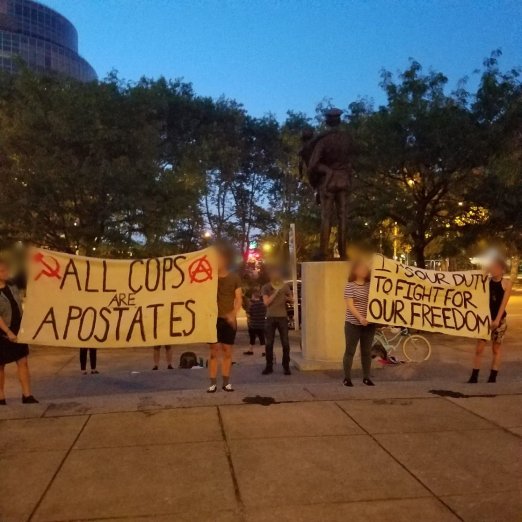
With our small group of 10 or so people, we prayed for those striking in prison, the abolition of the police and all prisons, as well as our own incarcerated friends and family. As we wrapped up our time of prayer, we held up our banners (“All cops are apostates” and “It is our duty to fight for our freedom”) and got on the megaphone. While on the megaphone, we stared right at the police and those employed at the Roundhouse through the windows. We read out the demands of the prison strike and then two comrades led us through a prayer of rebuke and exorcism, and plead with the officers to repent of their sins – namely being fascist tools – and quit their jobs. We wrapped up by chanting “Quit your jobs!” and “God hates cops!”

As things concluded, some bike cops came around asking questions and then followed some comrades on their way back home. As much as we do not enjoy the presence of cops, it felt good to know that this small prayer meeting was able to annoy these officers. It was also awesome that other abolitionists who aren’t affiliated with Friendly Fire or don’t identify as Christian came out in solidarity. We very much appreciated the support.

The Roundhouse has been a place of trauma for many of those present at this last prayer meeting and, of course, it is a place of trauma for many, every day. We are thankful that we had the opportunity to call down God’s judgment on this building and the Philadelphia Police Department, as well as reclaim this space for healing, prayer, and camaraderie.

All favor, honor, and blessings to those currently striking in prison!
May God’s most severe judgment rain down on all cops!
The kin-dom of God is near!

Prison Strike Solidarity Noise Demo Reportback


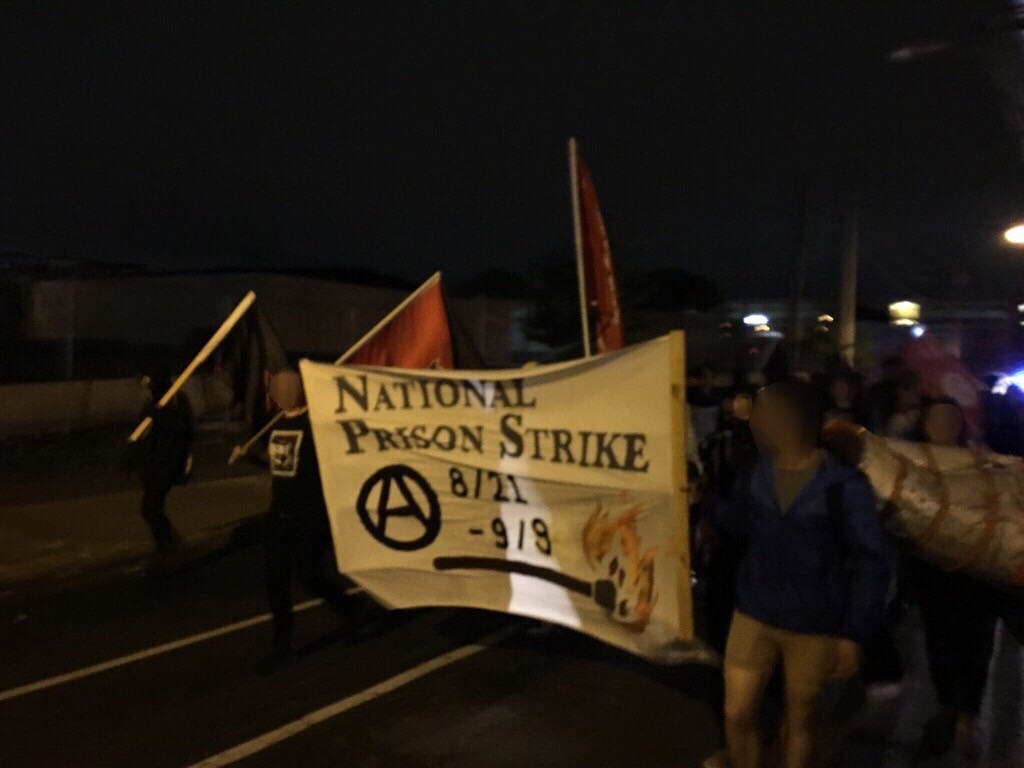
In solidarity with the national prison strike beginning on August 21st, a noise demo took place in West Philly outside the Philadelphia Juvenile Justice Service Center (a youth detention center, to be clear.) The demo was called by the Philly IWW, with substantial support from the Friendly Fire Collective, Liberation Project, and several other groups and autonomous rebels.

Earlier on the day of the demo, door-to-door outreach took place in the neighborhood to inform people of the demo and the strike more broadly. This was generally well-received!

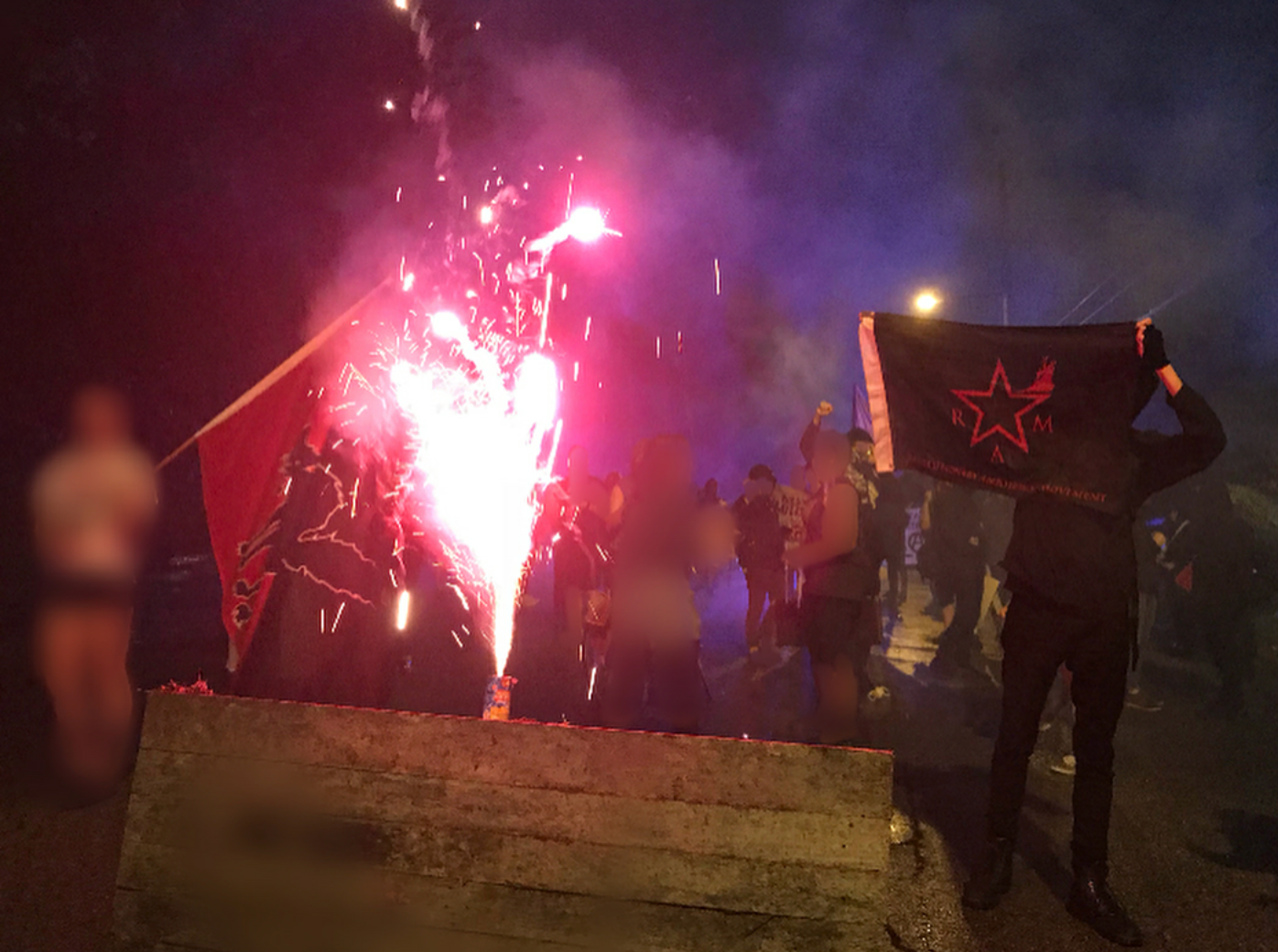
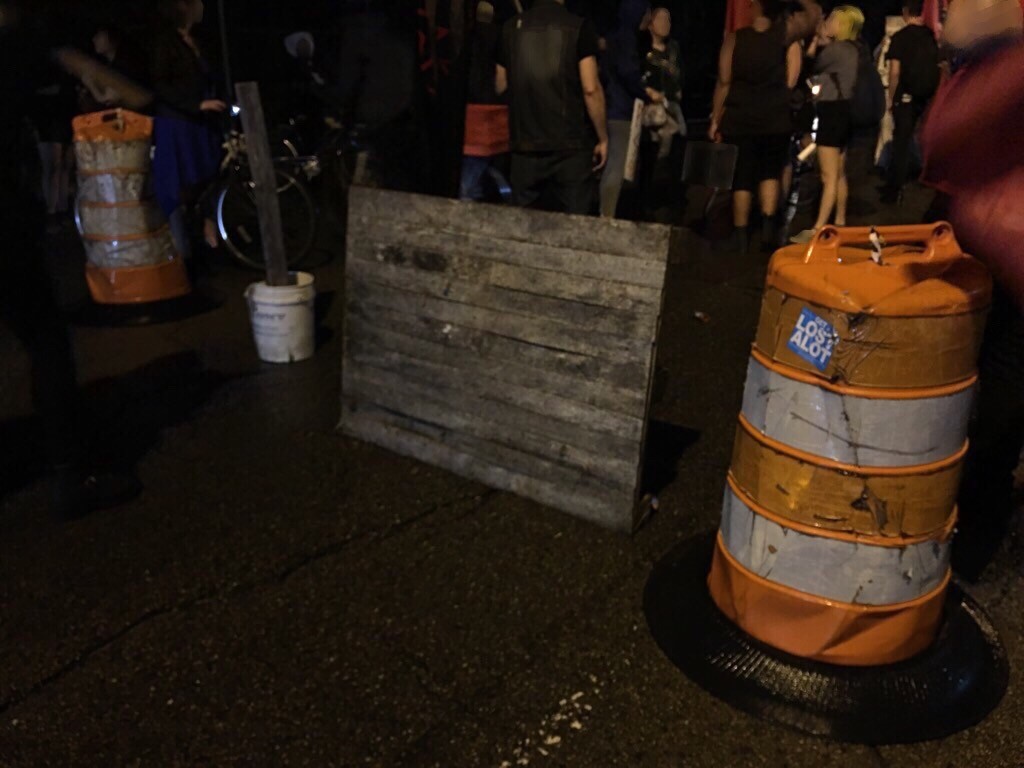
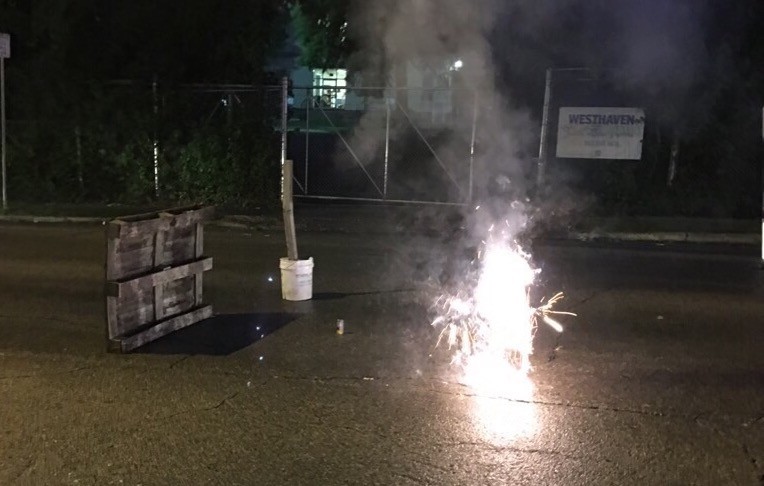
Roughly 75 people convened outside the main entrance of the complex with banners, IWW, RAM and black flags, as well as signs reading the demands put forward by the national strike. While still on the sidewalk at the entrance, participants made lots of noise before reading off the ten central demands of the strike. Very few police had responded at this point, but they began to take up positions surrounding the demo. In response, and with the sound system starting up an FTP playlist, we moved just south of the entrance and took the street in a spot past the police and where we could be more visible from the dorms of the detention center. At this point, a small amount of nearby debris was brought into the street to form a small barricade and fireworks began to be lit.

This went on for more or less 90 minutes, and as numbers began to dwindle those remaining set off on a short march through West Philly. The march threw traffic cones, pallets, and other available obstacles in the way of pursuing police before taking an intersection, again reading the ten core demands of the strike, and dispersing with no arrests.

From this individual’s perspective, a lot went right and there are some things to build on and learn from! It was unclear if those held inside could consistently hear and/or see the demo. In the future, larger numbers of larger fireworks should probably be used, as in past noise demos in the city. That said, the use of light barricading continues a recent trend of normalizing that sort of thing in Philly. Let’s keep putting objects between us and the police! Maybe we can get really good at it!

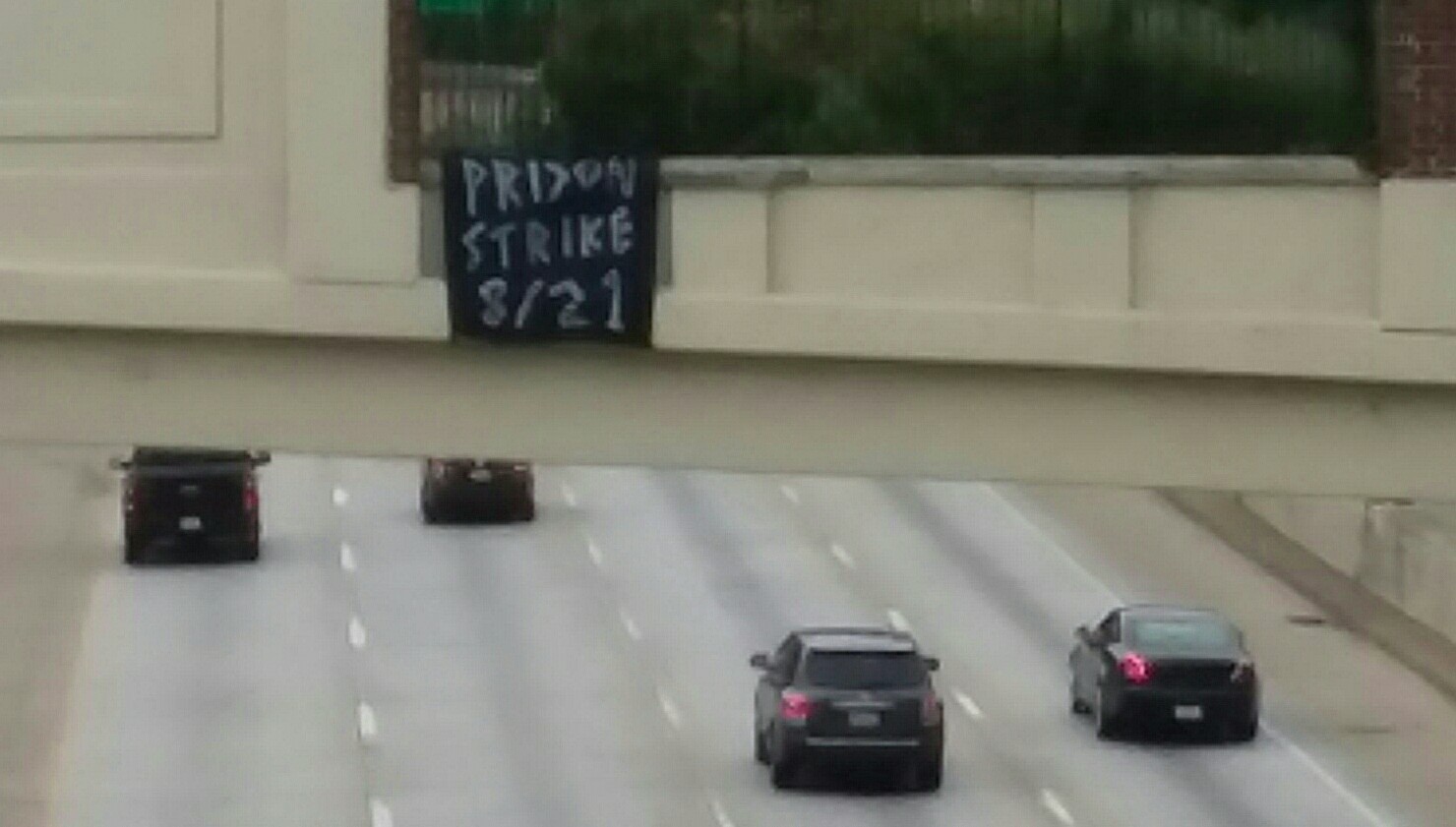
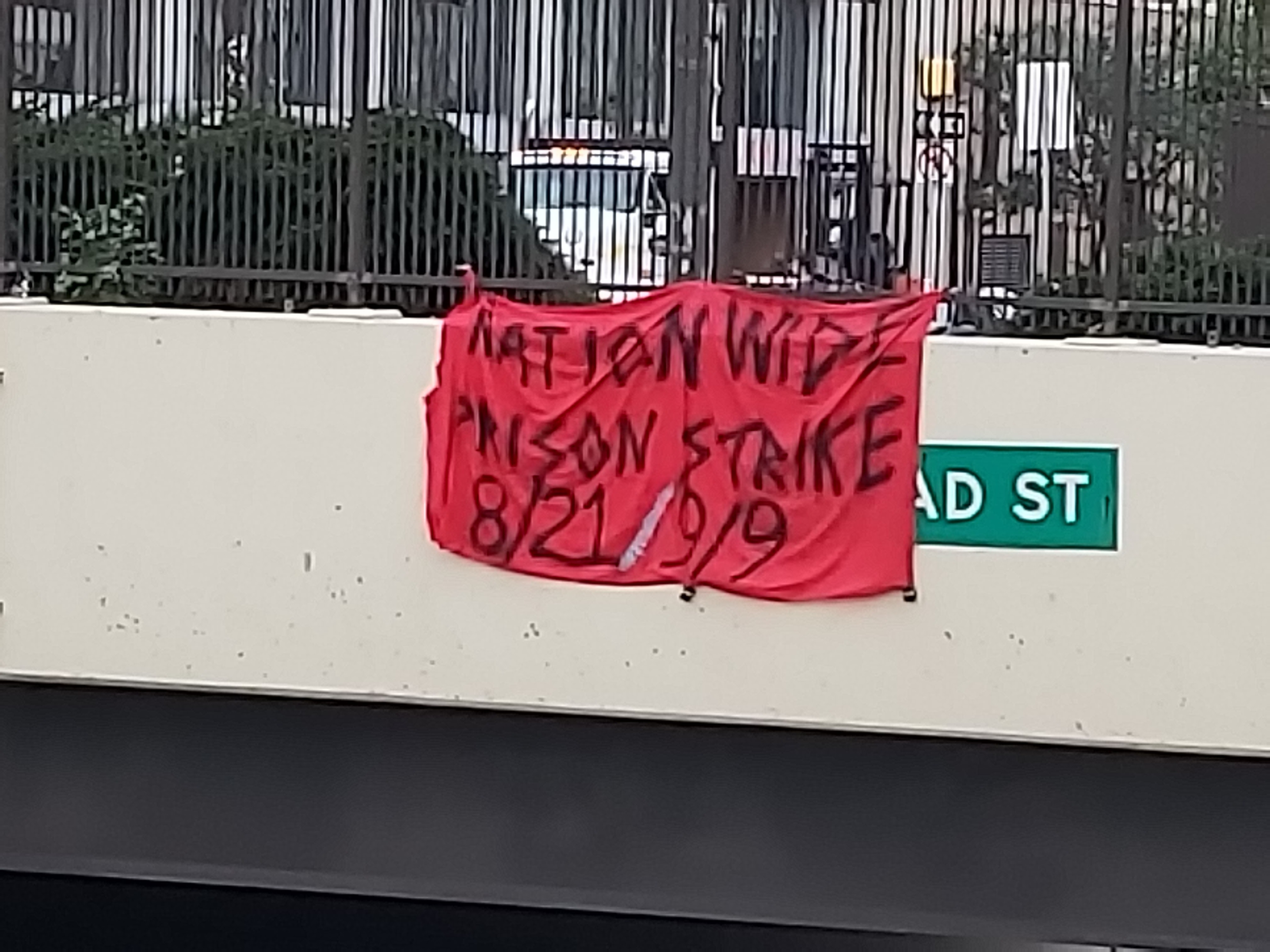
Earlier in the day banners for the strike were dropped at multiple locations in the city. More strike solidarity actions are forthcoming, so keep an eye out.

Towards a world without borders, police or prisons,

may a sweeping assault on reality persist,

– some people on occupied lenape land

Reflections from March Against Blue Lives Matter

Submission

On August 25th, actions took place to counter a Blue Lives Matter march on occupied Lenape land, Philadelphia, PA. A robust description of the organizers for the Blue Lives March and their connections to and affinity with white supremacy, transphobia and anti-immigrant politics can be found here: http://archive.is/8CIpg. A pretty decent description of how the events unfolded can be found here: https://itsgoingdown.org/antifascist-rally-in-philadelphia-met-with-police-violence/.

https://www.youtube.com/watch?v=Qgi6bekxjTc

Below are some (very incomplete and rushed) thoughts that feel relevant from one participant:

After the police violence we dealt with, several reportbacks and press releases framed the events as a situation where police needlessly escalated an otherwise non-violent and non-confrontational situation. While it is accurate that our team was unable to effectively attack either the fascist march or the police, and didn’t really have the opportunity to try at any point, it is decidedly inaccurate to assert that we did not have confrontational intentions. We should not play into narratives of innocence set up by our enemies when faced with state violence that we know is coming. We are in a violent political conflict with both the state and proto-paramilitary formations nationally and ought to recognize this and talk about it as it is.

In this vein, when we *do* successfully mobilize a confrontational action, we should hype that whether it goes well or not. That is the capacity we want to be building, and the 25th was another step in the right direction. Further, narratives about us being pure victims of unprovoked police violence erase the courage of those who took risks, arrests and blows in order to defend others from the cops. We had each others’ backs that day, and while it didn’t work out, that still means something. Let’s lift that up to encourage and normalize practices of immediate defense, de-arrests, and risk-taking.

Keep moving! We really need to work on both mobility and blockading. At one point, the bloc came out of an alley filled with dumpsters, saw a contingent of bike cops moving toward us, and allowed them to come up and form a line. Rather than use nearby obstacles to create space between us and the cops, we ended up in a futile standoff, dragged on longer than necessary largely by indecision.

Use what is around! At the spot where the initial arrests took place, a very large number of police barricades (left over from the most recent Occupy ICE/Homeless Against Stop and Frisk eviction) were ten feet from us. Using those to create space (as west Arch was undefended) rather than try an uncoordinated dart through bike cop lines could have been fruitful. And again, there are rolling dumpsters literally everywhere in center city.

Be ready to take advantage of opportunity! Early on, before a significant police presence had formed, we darted past the Criminal Justice Center. Aside from a couple bottles being tossed at the windows, nothing happened to the building. This would have been an especially good target considering the nature of the fascist march that day, and done well to emphasize solidarity with the prison strike. The same could be said for at least a couple empty and undefended police vehicles that we passed before the initial confrontation.

A lesson to really internalize here is that the police may escalate at any time. If, say, the above opportunities *were* seized, or our team escalated in any other ways, it’s likely that repression faced afterwards would be blamed on those actions. It’s important to keep in mind in the future, when we do go harder and actually crime it up better, that such actions are not to blame for repression. We’ve seen repeatedly that toning down our actions does not keep us safe.

And finally, the composition of the march appeared to me to be informed to some extent by its framing as primarily an “anti-fascist” event. Without going too much into the potential pitfalls of prioritizing a sort of narrow antifascism over emphasis on broader structures of domination (here is a very good starting point for that: https://itsgoingdown.org/beyond-bash-fash-critical-discussion), it seems plausible that placing more focus on the anti-police nature of our mobilization *may have* drawn more people and projects in the city into this action.

To be clear, these thoughts are all offered in extreme good faith, and I’d like to repeat that my main takeaway from the 25th is that we really had each other’s backs and did our best. Let’s do that more!

Let’s continue to care for one another in dealing with our physical and emotional wounds.
Let’s come back harder soon.

fire to the prisons & the cops,
death to fascism & white supremacy, and let’s be real, fuck democracy too,
– some anarchist living on occupied Lenape land

Antifascist Rally in Philadelphia Met with Police Violence

from It’s Going Down

The Peace Report gives us a blow by blow of a police attack on an antifascist rally in Philadelphia.

On Aug 25th in the city of Brotherly Nazi-Love (Philadelphia), two rallies occurred at the same time. One rally was organized by various alt-right groups (rumored by Fraternal Order of Alt-Knights) and individuals local to Philly. The other rally was organized by various far-left groups made up of socialists, communists, and anarchists. The police ended up protecting one rally while using violence towards the other rally. Can you guess which one was met with violence?

The far-left rally was attacked viciously by the police while the Alt-Right group was given the red carpet treatment by Philadelphia Police Department. The Alt-Right rally was organized by a group on Facebook called “Sports Beer & Politics II” (SPB), who marched under the cover of a #BlueLivesMatter rally. This is a clever move as it shows their support for the scumbag police forces in Philly while covering their true political aspirations: Nazism, white supremacy, and fascism.

As a way to counter-protest, various far-left groups in Philly organized a march called, “Fascists Go Away: March Against Police Brutality.” This march was in solidarity with several issues: solidarity with prisoner strikes, march against fascism and police brutality, and to expose the SBP group.

“I’d say the anti-fascist group was about 60-75 people deep and from what I’ve gathered on the SBP side, they had less than 20.”

The #BlueLivesMatter march began at the Liberty Bell in center city Philly while the anti-fascist march began near city hall. The plan was to meet halfway but, of course, the police intervened blocking the anti-fascists from getting anywhere near the alt-right march.

The anti-fascists attempted to find alternative routes, rushing down alley ways and marching down alternative routes but none that were successful. The police pigs had cops on bikes, cars, vans, and on foot to block every path towards the SBP group. The Philly police department even had a helicopter flying over the city coordinating their plan of action. It was pretty appalling to witness how much equipment and police forces were utilized to prevent two somewhat small groups from interacting.

I’d say the anti-fascist group was about 60-75 people deep and from what I’ve gathered on the SBP side, they had less than 20. Instead of posting photos of the great number of 20 or less alt-right group, they only posted a photo of a Trump-supporting grandma in a wheelchair with a title saying, “Philly ANTIFA showed up to BASH THE FASH. I wonder if they gave grams the pounding she so richly deserves.” We all know they love to hide behind the sheets when it comes to propaganda.

Also, nearly every single piece written in media outlets only show photos and videos of the anti-fascist march. The photos that do show the #BlueLivesMatter march only show a few people marching. The only videos of the march I found literally show a dozen or so people marching, posted by @darrylcmurphy, a reporter from WHYY:

After several blockades set up by the police, violence finally occurred. I’m really not sure what set it off and nobody seems to have any video of the beginning. The rally came to a halt in the middle of an intersection for a longer than usual period. There was much going on and many cameras were facing different directions trying to film several different confrontations. But as soon as the violence began, all cameras, including mine, started pointing towards the straight-up street brawl between anti-fascists and police.

I saw, and filmed, police tackling people off of their bikes, swinging their batons on the heads of masked citizens, and a huge group of police forces cordoning off the area with force. It all happened very quickly. But even after the initial brawl that was going on, I saw police 5 feet in front of me unnecessarily tackling American citizens, using elbow-swings on heads, and throwing people down on the ground. Then they walked away. The police just wanted to get some of their aggression out I guess. Or the police are doing what they have always been trained to do: use unnecessary force illegitimately without any accountability whatsoever.

Police officer hits person in the head with baton.

In the end, a total of 16 people were arrested. Nine of them were charged with citations for failure to disperse while 7 were charged with a misdemeanor of disorderly conduct.

I want to state that I have no affiliation to any groups of either march. I’m new to Philly and have no connections. I am a filmmaker and founder of The Peace Report. I focus mainly on anti-imperialist work but it’s been so difficult in that arena because fascists are literally marching down the streets of America. As an anarchist, which much of the world doesn’t know about me, I am turning my attention more towards domestic issues. I only hope my fellow comrades expand their work towards anti-imperialism. We need each other to bring down the system.

If you want to help me fight the imperialist powers and the destruction they are causing outside of our borders, come swing my website http://thepeacereport.com/

Solidarity!