Please read Ant’s personal statement on his case/release (also found on his IG and Facebook) in his own words . We ask that folks take note of and respect his boundaries about the case and how he moves in our community going forward and we are so grateful to y’all for your continued support for our man. Please continue to boost/share/ follow here for updates and keep donating at the PayPal account (clickable link found in bio). #FreeAnt#FreeEmAll#Dropthecharges
To our comrades in Philadelphia, Rockford and across the settler colony known as the United States,
The struggle for black liberation has intensified since the anti-police uprising that began in Minneapolis in May. The rebellion spread like wild fire across the so-called United States. In Rockford, we witnessed a black led multi-racial revolt against the Rockford Police Department on May 30th. Many of our comrades were arrested on that day and throughout the rest of the summer.
Despite the apparent Biden presidency, the state repression of the abolitionist movement will continue. It does not matter who is in office. The Federal charges against Anthony Smith in Philadelphia and others across the United States are proof that the State is attempting to create a new generation of black political prisoners. Repression will continue regardless of who is in power.
We encourage all revolutionaries to organize their communities to defend people being targeted by the State for their participation in the rebellion and radical political action. A truly resilient movement must support people facing state repression for their actions and organization. Let us build anti-repression councils in every city. Say no to the new Cointelpro!
We hope with our banner to amplify the demands of Philly revolutionaries to #FreeAnt. Furthermore, Ant’s charges and the charges of all others in Philly must be dropped. We also uplift the demands of the Black Philly Radical Collective to for the immediate release of Mumia Abu Jamal, Major Tillery, Arthur Cetawayo Johnson, Russell “Maroon” Shoatz, Omar Askia, Joseph “Jo-Jo” Bowen, and all Black Political Prisoners. We cannot forget our revolutionary elders.
It is imperative that revolutionaries in Rockford understand links between state repression in our own city and the larger State strategy to destroy movements for Black liberation. The Rockford Police Department and the Winnebago County Sherriff Office actions to surveill, repress and detain organizers, anarchists and movement participants is not unique to Rockford.
We demand that all protestors across the United States must be granted amnesty. All charges must be dropped. We have unconditional solidarity to all rebels, radicals and revolutionaries facing State repression.
George Ciccariello-Maher interviewed by brian bean
The recent rebellion in Philly against the police murder of Walter Wallace Jr. is rooted in struggles of the past and reflects the uprisings of the future.
This summer we took part in a rebellion across the country against racism and police brutality. Now, the nationwide scope of protest has diminished. However, since then we’ve seen more localized rebellions in Kenosha, and Chicago around the shooting of Latrell Allen, and around the release of the video in Rochester. Philly is the most recent. In that context, what’s going on with Philly?
The past weeks in Philly we have seen pretty significant rebellions around the police murder of Walter Wallace, about five blocks west of where I join you from. It’s important to understand that Philadelphia saw some of the most militant reactions nationwide to the killing of George Floyd. There was mass rebellion in Philadelphia that lasted several days and in June the National Guard was here.
This all takes place in the backdrop of a much longer shift in radical politics in the city, which goes back to around 2015, though it’s also bound up with much longer trajectory. We’re talking about a small group of organizers who were out there trying to raise hell around the police killing of Brandon Tate-Brown in late 2014 and 2015. As Ferguson and Baltimore were popping off we in Philly were struggling over this one particular case.
The militancy of those struggles, even if they were relatively small scale, really broke open the city, which has been a city of long-term resistance, a city in which Black struggles have been crucial, in which brutality and mass murder by the police, like in the case of the MOVE bombing, have been essential to understanding the political context.
In a way, Philly was primed to respond to the killing of George Floyd, and it did. I’ve never seen anything like what we saw in Philly on May 30th and into June. Not even during the Oscar Grant rebellions in Oakland—which was where I cut my teeth politically—did I see that scale of rebellion, looting, and mass resistance.
Now what’s happening today is interesting because it’s obviously more localized. We’re seeing a city and a population that’s really just had enough, that has a level of clarity around what the police do, that knows perfectly well that we don’t need to even entertain the lies about “Did he have a knife?” or that the police were just trying to do their job and keep people safe. We know that’s not true.
We know that police are trained cowards, who are taught from day one to put their life above anyone else’s life. This is why they shot and killed Walter Wallace. He was on a block full of people—neighbors, family members, none of them were trying to kill him because they didn’t think he was that big of a risk to their well-being. It was the police who decided to kill him, to fire fourteen shots.
We know that police are trained cowards.
You are seeing in the city that people just don’t buy the bullshit anymore, and they’re buying it less and less by the day. While the first night of protest we saw that the police were restrained by the police commissioner, who took a political beating back in June over the use of force, the use of teargas, rubber bullets, and extreme levels of brutality, they weren’t going be held back forever. They came back on the second night and really just beat the piss out of people for fun, because this is what the pigs do.
They thought they would get away with it like they always get away with it. But, as you probably have seen, there’s now a viral video of them smashing the windows out of a car, beating the passengers, and tearing a two-year-old child out of the arms of his mother. They then tried to take credit for rescuing him, saying that he was found wandering barefoot, which is an absolute lie. And then everyone saw the truth revealed, which is further confirmation of the embarrassment that the police represent, and that they are really just lying thugs who are out to protect themselves and no one else.
This, as a lot of other people have pointed out, is a deeply white supremacist and colonial idea that says: “The people that I’m brutalizing, I’m actually rescuing them. This baby whose windows I smashed out, who I stole away from his mother, I’m actually here to protect him.”
This is the veneer that policing has always had. No matter how bad the violence that is inflicted by the police on communities, they’re told they just need more police, and the police are really there to protect them. Policing is a form of psychological and physical abuse. And people really are just not buying it anymore.
What do you think has led to that level of clarity? I ask because in varying ways around the country, we’ve seen a shift towards people talking about defunding and even abolishing the police, seeing the institution as a problem in itself, not as something to reform. So in Philly, like you said, people have had enough and there’s this clarity. What do you think has led to that? Is it the ongoing organizing? Is it the national radicalization? Is it just people seeing it?
The first thing is that we live in a moment of global revolt and rebellion. This has been going on for well over a decade in the United States. I think the uprisings in Oakland in 2009 really helped kick things off, the Occupy movement followed just a couple years later, Black Lives Matter a couple years after that. You have this escalating spiral of struggles across the country, pin-balling around, and people are becoming more radical and they’re developing a better understanding of theory and seeing more of the way that theory plays out in practice.
They’re seeing that they have power in the streets, they’re seeing that struggles lead to actual change and transformation. This is all the context of what we now see occurring amid a devastating economic crisis and the continued impoverishment of not only poor communities of color, but also the indebtedness of students and the absence of a horizon of how to get out of this situation. This is the generation leading the George Floyd revolts, who are nineteen, twenty, twenty-one years old. They have grown up with nothing but Black death at the hands of police, economic crisis, no options, and no future. The fact that they are rebelling should not surprise us.
These spirals of struggle move across the country, radicalize here and there, and bring us up to the level that we’ve reached. You can see this in the words of Kandace Montgomery, an abolitionist organizer with the Black Visions Collective in Minneapolis who said: “In 2015 [when Jamar Clarke was killed] . . . we were clear about the problem. Now we are clear about the solution.” This is why you have this really astounding uniformity of calls to abolish, or at the very least defund, the police. These calls are not brand new—they’ve been emerging over the past few years, but the fact that this is what people are reaching for in this moment of struggle says a lot about the level of consciousness that’s developed over the past ten years.
We just had a national presidential election that offered a choice between an openly racist president and a more veiled racist vice president in Joe Biden, who campaigned on a law and order, shoot-them-in-the leg version of police reform. So those are the choices, and there’s rebellion in Philadelphia where there’s still a National Guard presence and where the Democratic mayor only just lifted a curfew. What does all this say about the current political situation and context both in Philly and nationally?
When Gramsci talks about a time of monsters, this is what he’s talking about. While I’m not even a Bernie stan, it’s clear that we could have had a Bernie. Instead, who do we get in the context of mass, nationwide anti-police rebellion? A segregationist and a cop. This was the Democratic ticket.
This is a time of monsters because it’s a moment in which we know which way history is pointing, but on some level that path is blocked. Now, while it’s blocked on the level of formal politics, it’s not blocked in the streets. In the streets, things are moving forward by leaps and bounds, and I think that’s precisely what matters.
These struggles will explode no matter who is in power. There are ways that having Trump in power sets off struggles by drawing more left-liberals into struggle and radicalizing them to play a crucial role in a growing coalition of resistance. But there are ways that when Obama was in power, for example, we had the eruption of Black Lives Matter because of the dashed hopes and the crushed expectations. Nothing is going to change under Joe Biden; nothing would really change under Donald Trump. So that collision with reality has a shocking and radicalizing effect on people who realize that there’s nothing left but the streets.
We know that in 2021, police murder is going to be the story, and we know that because it is an old story. If you look at the history of mass resistance in this country, that resistance is almost always driven by Black and brown people, almost always against the police, almost always sparked by police murder. Why? Because the police are founded on that great betrayal of the Black struggle by poor whites at the end of slavery, those who chose the Klan instead of multiracial equality. Instead of abolition-democracy, they opted for white terror.
So we should not be surprised that now, more than 150 years later, we’re looking at the same forces playing out in the same way, because these are historical questions that we haven’t yet dealt with.
You mentioned a continuity of organizing in Philly. What would you say about the connection between what’s going on currently and the struggle around MOVE? Of course, the MOVE house was about four blocks from the shooting of Walter Wallace.
The MOVE struggle and the struggle around Mumia, not to mention other struggles like the struggle for freedom for Russell Maroon Shoatz, are essential to understanding the political landscape in Philadelphia. They’ve provided it with a radical backbone that leans toward two opposing poles. One is a level of kind of mass fear. It was just in 1985 when the City of Philadelphia dropped a bomb on West Philly, killed scores of people, and burned down the city block. That’s not that long ago; everyone remembers it. Even when I moved to Philly a decade ago and started organizing, people were like, “Thank you for doing this, this is amazing. But you’re all gonna get yourselves killed.” That fear is deeply embedded in the psyche. At the same time the recognition of what the police in the city actually stand for is undeniable.
And so you have a situation that gives rise to a willingness to engage in mass resistance. There are lots of material dynamics that play into this: who’s in charge, how it’s played out, and the way that these struggles are able to coalesce. You can see an escalating spiral beginning with struggles around Brandon Tate-Brown, in which small groups of people were constantly in the streets, constantly confronting the police commissioner. Bear in mind that this was Charles Ramsey, Obama’s top cop, the person in charge of the twenty-first-century policing reform report, who advocated civilian oversight and transparency but wouldn’t even tell us who killed Brandon Tate-Brown, who wouldn’t even give us that basic level information, wouldn’t release the video until we fought in the streets to get that, and until we frankly embarrassed him.
These are the cycles, the spirals of struggle. Around the same time, we had a solidarity rally with the Baltimore rebellion. That was the biggest thing Philly had seen in a decade. Thousands of people showed up, took over the streets, blocked the highway, and fought the police. They realized that what’s happening in Baltimore was exactly the same thing, essentially it is Philly’s twin city, and so we see it happen here, we see it happen there.
There were Black cops in 1890 and it didn’t make a difference.
The years since have seen just a consistency to this struggle, not just for demands for a better way of living and for equality, but a struggle against this consistency of police brutality. Philly, we should bear in mind, is a place that had an integrated police force in the 1890s. Du Bois wrote about this. There were Black cops in 1890 and it didn’t make a difference. There was so-called community policing in the 1940s and 1950s, and it didn’t make a difference.
I feel the realization that radical change is necessary is deeply embedded in the psyche of the city of Philadelphia.
So one of the strategic orientations that came out of the past wave of Black Lives Matter organizing is electing progressive prosecutors. Philly has Larry Krasner, who I think is considered one of the best examples of that. What is Krasner doing in this current rebellion and how has he oriented himself?
Absolutely nothing. Dead silence. I think it’s not hard to figure out why Larry Krasner won’t say anything about this until after the election. And even then, I’m not sure what he will say. He’s been very willing in recent weeks to assume a radical anti-Trump stance and to say he’ll prosecute people who show up at the polls to intimidate voters, and that’s fine. But there’s been dead silence on Walter Wallace. I say this as someone who’s pretty balanced in the sense that I think it’s good thing that Larry Krasner is in the DA’s office. We’ve seen hundreds if not thousands of people not sitting in jail as a result of that election, and we’ve seen important experiments in diversion and other strategies for keeping people out of prison, for not arresting people for certain crimes, and for decriminalization. These things are hugely important.
On the material level of movements, it’s been crucially important that, for example, when Occupy ICE was happening, all the people who were arrested were released within two hours with only citations. This is materially important for our movements and has made a huge difference. So I don’t think it’s about denouncing the district attorney. Though Krasner is also someone who’s sending people to jail and who’s not taking a strong enough position when it comes to people like Mumia. What we need to be thinking about is how to operate in a context in which things are getting easier in a certain way, but when it comes to the George Floyd rebellions, for example, the district attorney’s office is insisting on drawing a hard line between protestors and looters and prosecuting looters and releasing protestors. This is a division that, especially if we care about class unity and the unity of this class struggle, we have to refuse 100 percent.
But I think the question is less do we like or dislike Larry Krasner than it is: what does his presence in the DA’s office mean for people? Moving forward we need to push to have all charges dropped from May and June, and there may be some leverage for that after the presidential election.
Looting in Philly and elsewhere, like in Chicago, has been a major, divisive political question in which liberals want to divide the “good protestors” from the “bad protestors”, and people want to say, “Oh, that’s not the protest.” We at Rampant have written about this quite a bit as far as the viability and necessity of defending looting as a political tactic. What do you think the left should say around this specific question and what’s at stake?
I think a lot is at stake. The first thing I’ll say is the same thing I would say around debates around property destruction and violence in general as a tactic. There are certain people who approach social movements on the assumption that if they don’t want these tactics and they win the argument about them they’ll go away.
The reality is people are going to loot. In moments of mass uprising people are going to take things. We are obligated to start from an understanding that that’s going to happen regardless. It’s not like we can make it go away. And yet there are those people who say, “Well, looting makes us look really bad.” Well no, once we start from the understanding that it’s inevitable, a force of nature, you realize that what makes you look bad is not looting. What makes it look bad is losing an argument about whether or not this is something that should happen.
What makes it look bad is when people within the movement are denouncing other people for looting. This is what makes us lose these debates. However, if people stood together and said, “You know what? We’re not going to criticize people who are engaged in certain tactics during these moments of mass uprising in which our concern is the murder of this Black man.” And at that point, the debate goes away. The media of course will still run with it, and they’ll try to discredit people and the movement, but it doesn’t have the same effect.
People are managing the narrative pretty well in the movements now where people are correctly pointing out that Walmart doesn’t belong to us, Best Buy doesn’t belong to us. These big box stores are part of an oppressive capitalist system, and we know that they are stealing from us and stealing people’s labor every day. We shouldn’t give a shit about whether or not they’re looted and could even say that the direct redistribution of goods from them is probably a good thing in this context, under a pandemic, when people are not working and can’t access those things.
The debate does get a little more complex on 52nd Street, two blocks away from here, where some small stores were looted. If you ask people on the block, you hear very different opinions. On one hand, that’s a neighborhood store, it’s owned by this or that person. On the other hand, people will say, “I don’t know who that person is. I know that they racially profile me when I go in there.” And people will ask if those resources are really being dedicated to the community? These are complicated debates.
But the idea that there’s a uniform response to those debates within poor communities of color is just not true. What needs to happen and what does happen are people negotiating these questions in the streets and within movements, when people, for example, try to alert people to locations that should be left alone.
You know, there was an Indigenous youth center in Minneapolis that got smashed up during the rebellions. That didn’t lead people to denounce the looters, but it did lead to them to say, “No, let’s not do this. We’ll have a fundraiser,” and the America Indian Movement engaged in community patrols to help keep an eye on people’s safety.
Dealing with these things within movements is possible and necessary. But the main danger of course—that’s being actively stoked by the police, by the state, and its spokespeople—is that it is used to divide the movement. This has been incredibly dangerous, and in some cases, very effective.
You talked about the radicalization and cycles of resistance moving in leaps and bounds, particularly now. What do you see as the next jump? What’s the way forward, and what do we have to do?
These struggles have been, as everyone knows, popping off everywhere. One of the defining features of the George Floyd rebellions was their contagious ability to spread to the point where we see statues of colonizers being torn down in England as a result. One thing that is undeniably true about the history of Black struggles against the police in the United States is that you don’t know what’s going to set it off. There are all these structural reasons why this was a tinderbox ready to explode. But you never know when the explosion’s going to happen.
It’s going to be an incredibly dangerous time as the old world dies.
We do know that the powder and the spark are even more available today. In January when Joe Biden is in office he’s not going to do a fucking thing to change this deep-seated reality. We know that the history of police reform is the history of reforming the image of the police, not what they actually do. And we know that there is no way to reform away the actual function of the police, which is a repressive, brutal function. That is inevitable, and under this system it’s going to continue.
This continuity is the backdrop to a situation in which people’s lives aren’t getting better, in which there’s a continuing pandemic, and the economic crisis is deepening. People are ready to go at the drop of a hat. We’re going to see an escalation of these struggles, and that’s a good thing.
We also know that the far right is going to be engaging in organized and sporadic violence. It’s going to be an incredibly dangerous time as the old world dies.
Anthony Smith was arrested by federal officers and taken from his home in the early morning hours of October 26th based on his alleged involvement in the arson of a police vehicle during a Black Lives Matter protest on May 30th, 2020. Instead of charging him locally, the Justice Department made the decision to charge him under federal law. If convicted of the arson, he will face a mandatory minimum of 7 years in prison. Following his arrest by federal officers, Anthony received over 70 character letters attesting to his selflessness and dedication to serving his community. After Anthony Smith’s detention hearing on November 6th, 2020, the presiding judge ordered his release on his own signature with certain conditions; however, the federal prosecutors, determined to keep him incarcerated pending trial, appealed the judge’s order of release. This requires Anthony to remain in custody until the appeal hearing takes place. As we await his second detention hearing, we urge the community to recommit to standing by Anthony as we continue the fight for his release. Anthony has always fought for the equitable treatment of the members of our community, and now it is our duty to stand up and fight for him. Show your support by signing this petition requesting his release.
Can you join us and take action? Click link in bio or write out this link: https://actionnetwork.org/petitions/bring-ant-home/
It is our duty to fight for our freedom. It is our duty to win. We must love and support one another. We have nothing to lose but our chains. #FreeAnt
For Immediate Release***Contact Info***Phone: 267-566-7671Email: phillyforrealjustice@gmail.comFacebook: PhillyforREALjusticeTwitter: @PHLRealJusticeFederal Agents Arrest Outspoken Philadelphia Activist Amid Rising Repression of the Black Lives Matter MovementPhiladelphia, PA (October 28, 2020)Early Wednesday morning, federal agents raided the West Philadelphia home of Anthony Smith, an outspoken community activist and a leader in the movement for Black lives in Philadelphia. Smith, 29, was arrested and is being held on multiple Federal charges several hours away from his home at the Allenwood Jail as he and his community struggle to pull together his legal defense. Smith’s arrest comes after nights of community uprising in West Philadelphia after the police killing of Walter Wallace Jr. There have yet to be any charges brought against the officers involved in the shooting and as of yet the community has not even been told the names of the officers.
“After two nights of mass arrests and police brutality against community members calling for justice for Walter Wallace, seeing Federal charges brought against a movement leader like Anthony is sickening,” said longtime friend James Miles. “All this makes you wonder, ‘Is the Federal government arresting and charging movement leaders to try to scare the rest of us?”
Anthony Smith has been the victim of police brutality on multiple occasions throughout his life. His first encounter with police violence was being stopped and frisked by Philadelphia Police officers at the age of 10. Over the years, as he became more outspoken about the injustices Black people face at the hands of police, he has become an explicit target at protests. Earlier this summer, Smith was arrested while peacefully protesting in West Philadelphia in the wake of the police killing of George Floyd. He was held without charges and threatened with violence from the police before being released hours later and forced to walk 3 hours home in the middle of the night.
“We’re tired of Black Philadelphians being targeted and held on trumped up charges for having the audacity to stand up for their community, ” said Philly for REAL Justice steering committee member Kamau Mshale. “Whether it’s Mumia 40 years ago, or Anthony Smith last night, Black people are being thrown in prison for speaking truth to power.”
Smith is a beloved social studies teacher at YouthBuild Charter School, where he is known for the genuine connections he builds with his students inside and outside of the classroom. In his free time, he is an organizer and volunteer with multiple organizations throughout Philadelphia. He is a fixture at 60th and Market each Friday, where he serves free food to the community with Food not Bombs Solidarity. In addition to being a valuable asset to his workplace and a standout organizer, Smith is a beloved community member with a passion for making sure that everyone around him is protected at all times.
“Anthony is one of the most selfless people I know,” says college classmate Dr. Jasmine Peake. “Anything that he’s ever done has been in defense of his community. It really hurts to see him ripped from his family and friends in the middle of the night and thrown in jail.”
For years, Smith has organized with Philly for REAL (Racial Economic and Legal) Justice, an organization which just been recognized as being at the forefront of the movement to take #RizzoDown, has called for an end to stop and frisk policies in Philadelphia, and has supported the families of victims of police murder in calling for accountability for their loved ones. Philly for REAL Justice is also one of the convening organizations of the Black Philly Radical Collective which has released 13 demands calling for an “End to the War on Black People.” Smith’s arrest comes on the heels of mass arrests across Philadelphia over the last few nights and in the wake of federal charges being brought against Black Lives Matter movement leaders across the country.
We demand that these baseless, politically-motivated charges be dropped,” said fellow REAL Justice steering committee member Felicia Teter. “We demand the immediate release of Anthony Smith and all others who have been arrested for their participation in the Black Lives Matter movement We will not let Anthony become yet another political prisoner at the hands of this fascist government” Up Against the Law Legal Collective is supporting Anthony Smith and all those on the streets protesting against Walter Wallace’s murder.
If law enforcement, federal or otherwise, approach you on the street, come to your home, or contact you in any way, do not speak to them without a lawyer present. You have the right to remain silent, exercise that right.
#FreeAnt !!! Tomorrow!! Community Gathers to Call for the Immediate Release of Beloved Organizer Anthony Smith WHAT: Philly for REAL Justice is holding a Press Conference to speak out about federal agents using Gestapo-like tactics to raid the home of Anthony Smith, his blatantly unconstitutional treatment in Federal custody, and to call for his immediate release. WHEN: Friday, October 30 at 9:30am WHERE: Malcolm X Park, 5150 Pine St, Philadelphia, PA 19143 WHO: Philly for REAL (Racial, Economic and Legal) Justice, Human Rights Coalition of PA, and the family, friends, co-workers, and supporters of long time organizer, educator and community advocate Anthony Smith. WHY: Anthony Smith was targeted, arrested and imprisoned for exercising his protected First Amendment rights to peacefully protest. The federal government is trying to assassinate Smith’s character and pin baseless charges on him because he is an outspoken community advocate. He is being held for weeks without the chance to post bail or have access to his lawyer. This is an attempt to paint him as a criminal, threatening his job and livelihood while taking away his fundamental right to be presumed innocent until proven guilty.
Philadelphia, PA – West Philly saw a quickly escalating situation develop on 4 p.m. Monday afternoon and dragging into the evening and overnight. In a graphic and disturbing video circulating on social media, two white Philadelphia Police (PPD) officers are seen repeatedly shooting a Black man in front of his mother from several feet away as he walked while holding a knife. Neither of the two officers in the video seemed to attempt to use their taser, and they appeared to have fired around ten bullets while they were several arms lengths away from the man they shot.
The man struck down dead by the two PPD officers was identified as 27-year-old Walter Wallace, Jr.
His father, Walter Wallace Sr., told the Philadelphia Inquirer that his son was dealing with mental illness, was on medication, and “his mother was trying to diffuse the situation” when police came and shot him.
Many witnesses were present for Wallace’s death and his family, friends and neighbors quickly reacted with grief and rage to the sight of him being gunned down dead in the street.
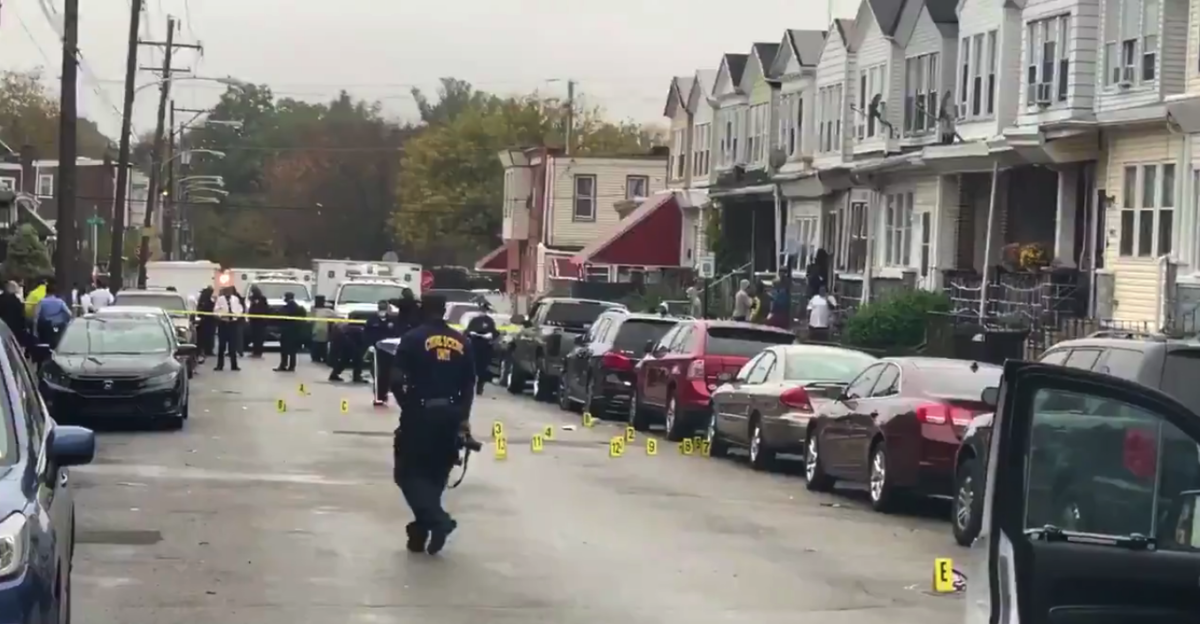
Video of the scene taken by Philadelphia Inquirer reporter Ellie Rushing shows that police had placed evidence markers indicating as many as 13 shell casings.
The scene of the deadly shooting of Walter Wallace, Jr. by two Philadelphia Police officers. Screenshot taken from Twitter video by Ellie Rushing
Both of the white officers involved in the shooting death of Walter Wallace, Jr. have reportedly been suspended pending an investigation. If common police practices for “officer-involved shootings” are being followed, they are both presumably now on paid leave.
In an official city statement, Philly Mayor Jim Kenney said, “I have watched the video of this tragic incident and it presents difficult questions that must be answered.” Kenney promised “a speedy and transparent resolution” but the only specific detail he offered was that the “Officer Involved Shooting Investigation Unit of PPD will conduct a full investigation.”
Philly District Attorney Larry Krasner’s statement about the shooting avoided any specifics but also promised an investigation.
Police called in reinforcements to clear the mourning neighbors from the street and reportedly dispersed the crowd at the shooting scene by 6:30 p.m., according to the Philadelphia Inquirer. Around 7 p.m. on Monday night, a crowd of several hundred protesters began to gather at Malcolm X Park.
Protesters marched throughout the area, taking the streets and followed by supporting honking vehicles. They also congregated for a time outside a nearby police precinct.
At some point outside the precinct, objects such as rocks and bricks reportedly began to be thrown at officers.
Police with riot gear and shields then pushed the crowd away from the police building, charging people through the street as trash cans and various other projectiles were pelted at them by an increasingly militant local crowd.
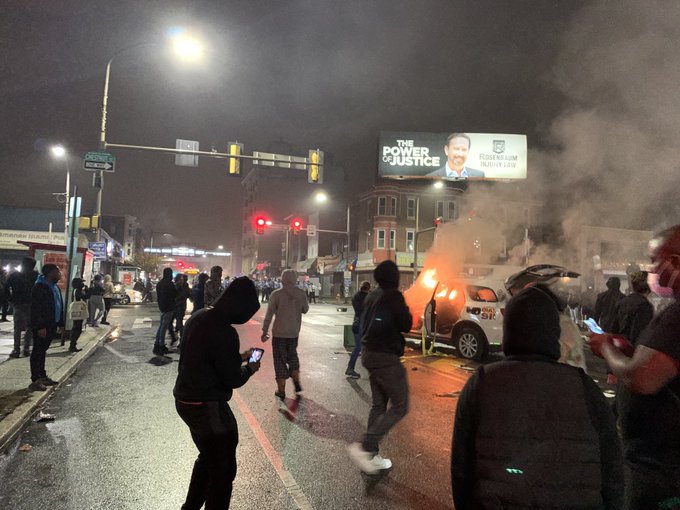
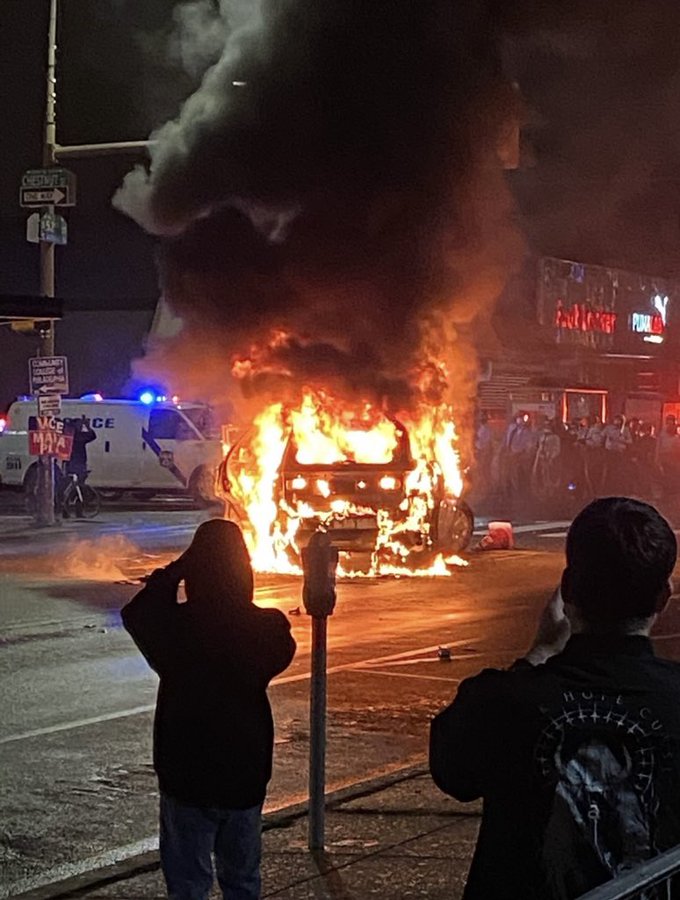
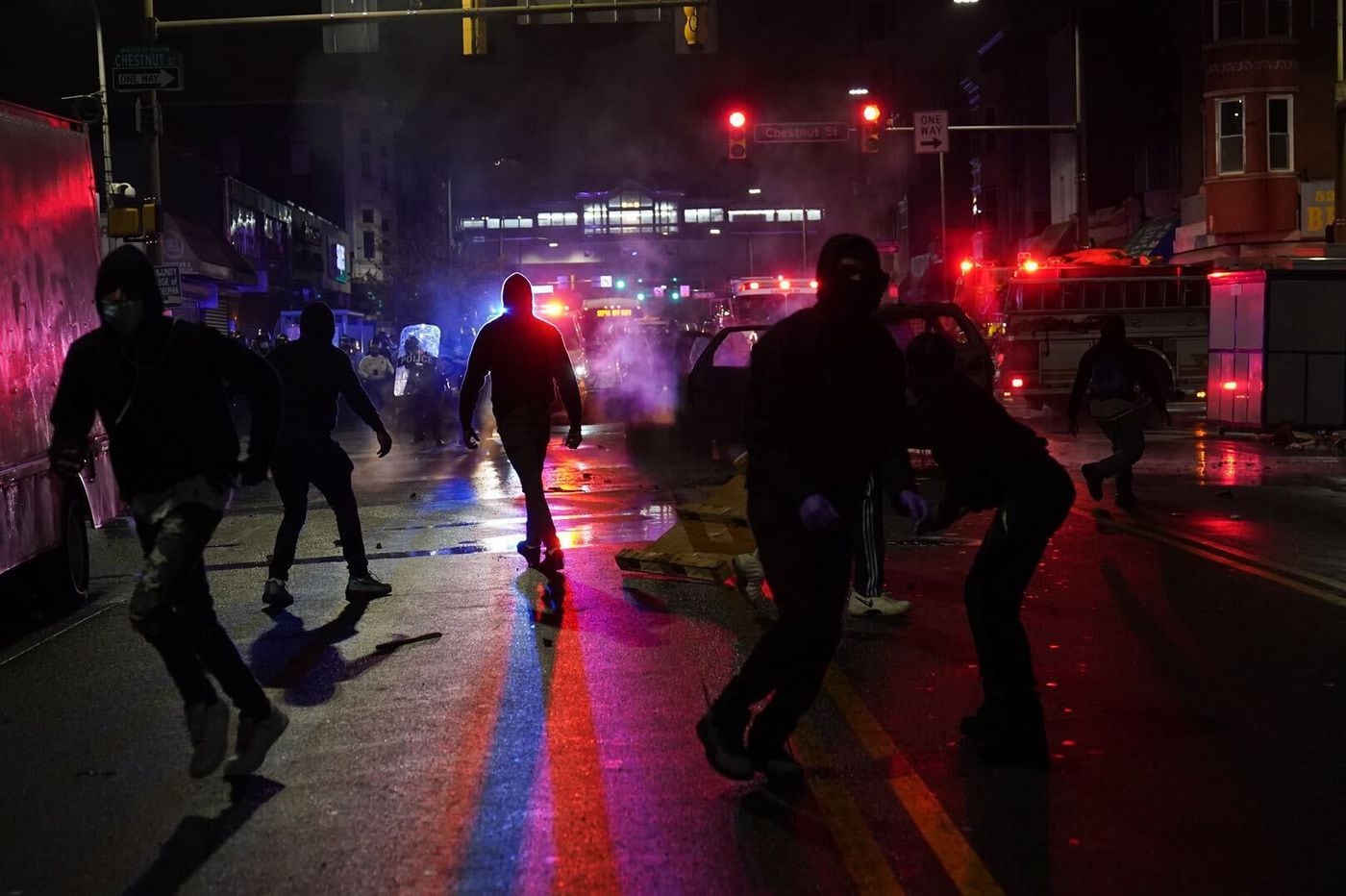
Police appeared unable to contain the community’s furious response to their having shot a Black man to death in the middle of the street in the middle of the day. Crowds went on to smash into several area businesses and take commercial goods, smash and burn police vehicles, launch fireworks, and reportedly commandeered at least one construction vehicle.
In one photo captured by Inquirer journalist Samantha Melamed (who was arrested by PPD while reporting on a protest in June) a police cruiser can be seen burning in front of a billboard reading “the power of justice”:
As of early Tuesday morning, protesters remained out in the streets of West Philly. Police made several arrests, with the Major Crimes Unit reportedly having been deployed.
According to Philly journalist Jason Peters, some arrested protesters are being held at PPD’s 18th precinct.
Philadelphia’s lodge of the Fraternal Order of Police, which supported officers involved in brutalizing protesters earlier this year, has indicated it will defend the cops who ended Walter Wallace, Jr.’s life while his family watched.
Police officers fatally shot a 27-year-old Black man armed with a knife during a confrontation Monday afternoon in West Philadelphia, an incident that quickly raised tensions in the neighborhood and sparked a standoff that lasted deep into the night.
Late Monday into early Tuesday, police struggled to respond to vandalism and looting along the commercial corridor of 52nd Street, an area that was the scene of clashes between police and protestors earlier this summer. At least one police vehicle was set on fire Monday night and destroyed, and several police officers were injured by bricks or other objects hurled from the crowd. One officer was hospitalized after getting run over by a speeding truck.
The episode began shortly before 4 p.m., police said, when two officers responded to the 6100 block of Locust Street after a report of a man with a knife. Family members identified him as Walter Wallace Jr.
A video posted on social media showed Wallace walking toward the officers and police backing away. The video swings briefly out of view at the moment the gunfire erupts but he appeared to be multiple feet from them when they fired numerous shots.
Police spokesperson Sgt. Eric Gripp said the officers had ordered Wallace to drop the weapon, and he “advanced towards the officers.” Gripp said investigators are reviewing footage of what happened. Both officers were wearing body cameras.
He said both officers fired “several times.” After the man was shot, he fell to the ground, and Gripp said one of the officers drove him to Penn Presbyterian Medical Center, where he died.
Walter Wallace Sr., the man’s father, said his son appeared to have been shot 10 times.
“Why didn’t they use a Taser?” the senior Wallace asked outside a family residence on the block. “His mother was trying to defuse the situation.”
He said his son struggled with mental health issues and was on medication. “He has mental issues,” Wallace said. “Why you have to gun him down?”
One witness, Maurice Holloway, said he was on the street talking to his aunt when he saw police arrive. Wallace had a knife and was standing on the porch of his home, Holloway said, and officers immediately drew their guns.
Wallace’s mother chased after him as he walked down the steps of his porch, still holding the knife, according to Holloway. His mother tried to shield Wallace and tell police he was her son.
“I’m yelling, ‘Put down the gun, put down the gun,’ and everyone is saying, ‘Don’t shoot him, he’s gonna put it down, we know him,’” said Holloway, 35.
Wallace brushed off his mother and walked behind a car before emerging again, Holloway said.
“He turns and then you hear the shots,” Holloway said. “They were too far from him; it was so many shots.”
Gripp said it was unclear how many times the man was shot or where he was struck. The officers fired possibly a dozen or more times, according to an account by witnesses and family members. Police marked the crime scene with at least 13 evidence markers.
Both officers, who were not publicly identified, were taken off street duty pending an investigation.
Police Commissioner Danielle Outlaw arrived at the scene shortly after the incident as a crowd of neighbors yelled at police and questioned the use of force. By 6:30 p.m. police reopened the street and the crowd had largely dispersed.
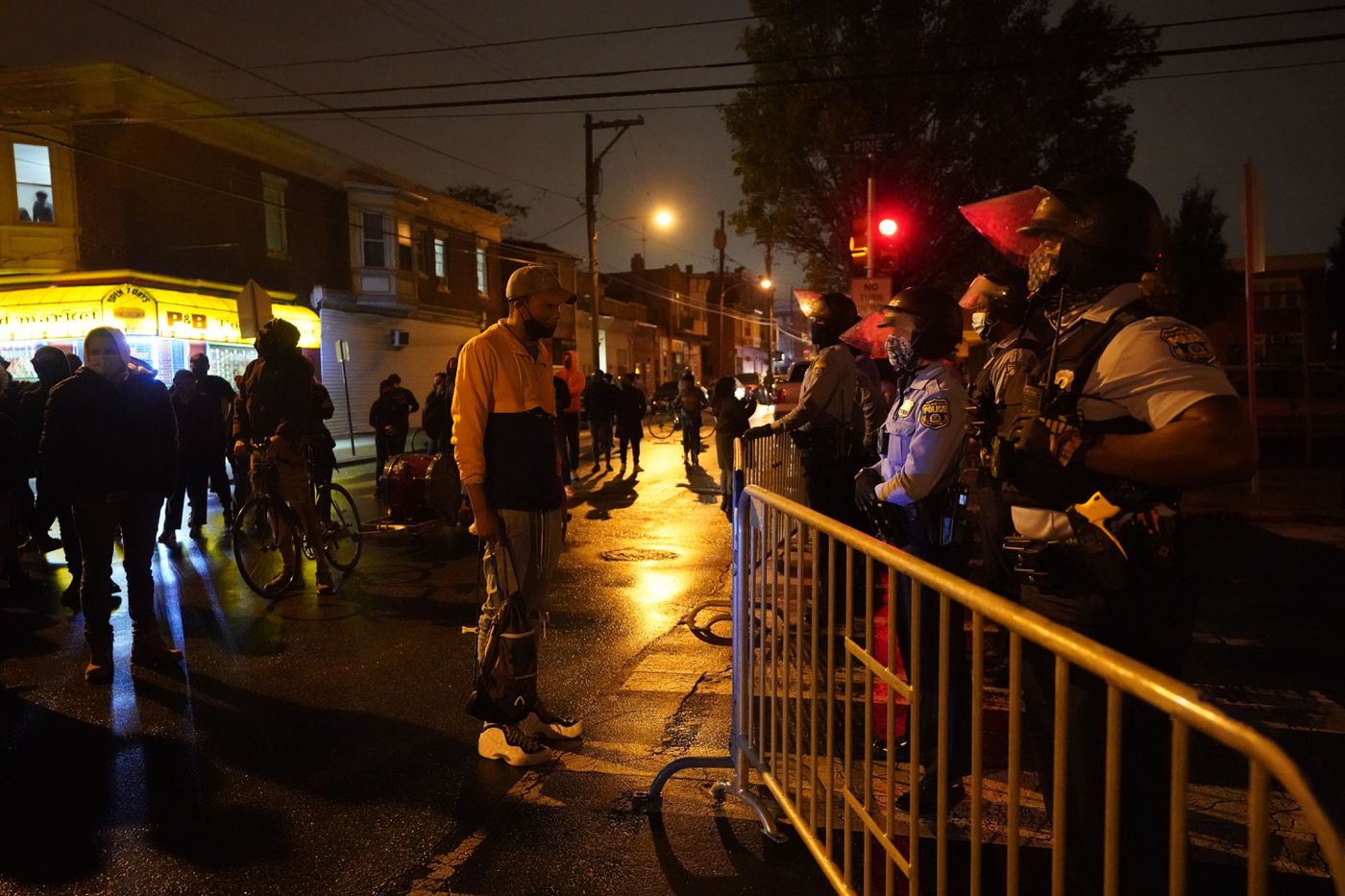
But dozens of protesters then gathered at Malcolm X Park at 51st and Pine Streets, chanting “Black Lives Matter.” They marched to the police station at 55th and Pine Streets as they chanted, “Say his name: Walter Wallace.”
For hours, protesters confronted officers who stood in a line with riot shields behind metal barricades at the station. People in the crowd could be seen throwing objects at the officers. A group also marched into University City, at least one TV news vehicle was vandalized, and police reported that windows had been broken on Chestnut Street.
Between 100 and 200 people then moved to the 52nd Street commercial district and caused considerable property damage from Market to Spruce Streets. Shortly before 1 a.m., a speeding black truck ran over an officer at 52nd and Walnut Street. The incident was captured on an Instagram livestream. The condition of the officer was not immediately known.
The 52nd Street corridor was the scene of unrest on May 31 and early June as nationwide protests erupted over the police killing of George Floyd in Minneapolis. Protesters clashed with Philadelphia officers and set police vehicles on fire; police responded with rubber bullets and tear gas on residential streets. Since then, the police department has forbidden the use of tear gas.
At times Monday, the scene threatened to repeat. Just before midnight, someone set fire to a police vehicle on the street. Ultimately, more officers in riot gear arrived and flooded the neighborhood, dispersing the crowd.
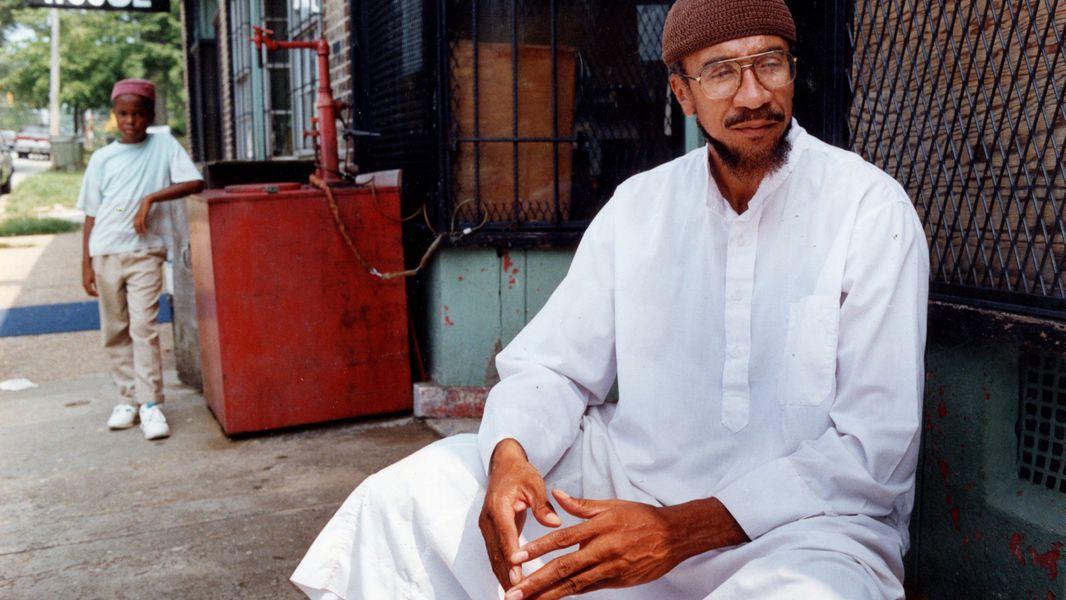
Join us on Monday, October 26th, 5:30 pm at the picnic bench just north of the playground at Clark Park. We’ll be writing letters to Imam Jamil Abdullah Al-Amin (formerly H. Rap Brown).
Jamil became known as a Black liberation leader as the chairman of the Student Nonviolent Coordinating Committee and Justice Minister of the Black Panther Party. In the early ’70s, he did five years as a political prisoner before being paroled in 1976. Upon his release, he moved to Atlanta, GA and led one of the nation’s largest Muslim groups, Al-Ummah. He is known to have greatly improved social services to the West End community in Atlanta.
From 1992 to 1997, the FBI and Atlanta police investigated Imam Jamil in connection with everything from domestic terrorism to gunrunning to 14 homicides in Atlanta’s West End, according to police investigators’ reports, FBI documents and interviews. On March 16th, 2000, Fulton County Deputy Sheriff Ricky Kinchen is shot and later dies, while another deputy Aldranon English is wounded after being shot by a man outside Imam Jamil’s store. English identified the shooter in the March 16th incident as Imam Jamil, yet testified that he shot the assailant — who “had grey eyes” — in the exchange of gunfire. Imam Al-Amin’s eyes are brown, and he had no gunshot injury when he was captured just four days later.
Now that Fulton County has a Convictions Integrity Unit, there is a good chance that Imam Jamil’s case will be reopened due to the known incongruities. This is doubly important because he has medical challenges — symptoms of Sjogren’s syndrome and smoldering myeloma (a form of blood cancer) as well as untreated cataracts. Due to his eyesight, write letters to him in large print if you are participating remotely.
Snacks and all the letter-writing supplies one could wish for will be provided. We will also sign birthday cards for political prisoners with birthdays in November: Ed Poindexter (the 1st), Joe Dibee (the 10th), and Josh Williams (the 25th).
An anticapitalist group taking part in what it called the “Summer of Rage” has claimed responsibility for unrest that erupted near the University of Pennsylvania campus Tuesday night, leaving windows smashed and prompting campus police to warn students and staff to remain indoors.
Roughly 60 people in black clothes and donning black masks gathered at Clark Park, near the intersection of 43rd Street and Baltimore Avenue, and began marching just before 9:30 p.m., campus police said. They quickly cut a swath of damage along 40th Street — building barricades, vandalizing several buildings and a marked Penn police car — before dispersing about 40 minutes later.
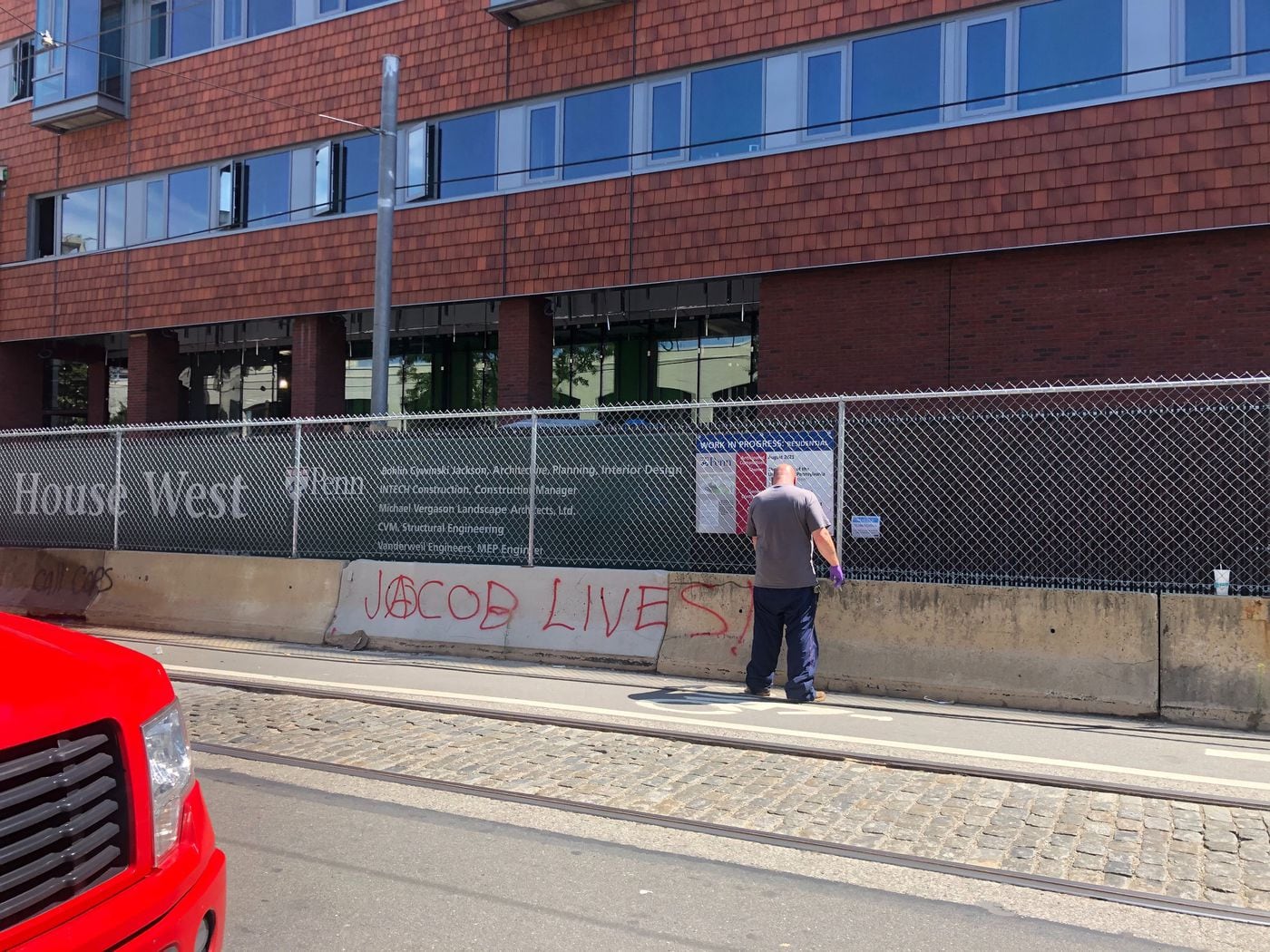
In their wake, several businesses were left damaged along 40th Street, including a PNC bank, a coffee shop, a pizza parlor, a bar, the Free Library branch at 40th and Walnut Streets, and a university residence hall that was spray-painted with the phrase “Nerds Call 911.”
A post that appeared Wednesday morning on Philly Anti-Capitalist, a clearinghouse for local antiauthoritarian and anarchist groups, and submitted by a person claiming to be an organizer of the demonstration, declared the event a success.
“Over 45 people marched through the streets chanting and smashing windows of banks, business and developments,” the post read. “There was a surprising amount of destruction.”
It went on to describe demonstrators using barricades to elude police intervention and covering identifying tattoos and facial features to avoid detection by authorities.
Philadelphia police declined to comment on whether their investigation of the vandalism was focused on the “Summer of Rage” group, saying only that the probe continues. Penn police didn’t respond to requests for details.
But as business owners and university staff boarded up windows, cleared broken glass from sidewalks, and power-washed antipolice and anarchist graffiti off building walls Wednesday morning, many were still trying to figure out exactly what had happened. Most of the businesses along the corridor were closed when the destruction began.
Security footage at Allegro Pizza & Grill near 40th and Spruce Streets showed a crowd of people walking north on 40th just before 9:30 p.m., flanked by people walking their bicycles and halting traffic. People in the front carried a banner that read: “F— the police.”
Louie K., a part owner of Allegro who asked that his last name be withheld over safety concerns, said members of the group spray-painted on the wall of his business and a man took a baseball bat to its ATM, causing more than $10,000 in damage.
Another local business owner, who asked to remain anonymous because he didn’t “want [his] windows broken, too,” said he saw a crowd of about 25 people in black clothing ransacking a construction site near 40th and Sansom Streets.
The group threw traffic cones and toppled trash cans, he said while noting he didn’t see any violent behavior. At one point, he said, police approached the crowd near Chestnut Street and the group shouted profanities at officers but kept on walking.
The gathering that led to the unrest came together quickly through mostly private messages and social media posts. A graphic shared on Instagram directed attendees — “in solidarity with Kenosha” — to meet at Clark Park at 9 p.m. and wear black. “Screenshot & share on IG story only,” the graphic read. (Instagram’s “stories” function is not easily searchable.)
The post early Wednesday morning on the anticapitalist blog said the group was marching in solidarity with Philadelphia sanitation workers, Black Lives Matter, and protests in Kenosha, Wis., over the police shooting of Jacob Blake, the 29-year-old man seriously injured by officers Sunday as he leaned into his car in front of his children.
Organizers involved in previous protests on behalf of those causes have disavowed property destruction in their pursuit of social justice goals.
Those demonstrators said they were marching against gentrification in the neighborhood.
Neighbors at the time described the masked demonstrators smashing windows, spray-painting messages like “Leave!” on new buildings, and throwing Christmas ornaments filled with paint. Two protesters were arrested after area residents surrounded the group and kept them penned in until police arrived.
No arrests have been reported in connection with Tuesday’s unrest.
The Solidarity with Kenosha, WI demo was more impressive than usual. People met up, discussed the plan, and started promptly. Escalation started right away and continued as a group of over 45 people marched through the streets chanting and smashing windows of banks, business and developments. There was a surprising amount of destruction. One of the most impressive things though, was the strong collective intelligence. There was good communication, barricading, and improvisation. People were decisive about both sticking to the plan and being flexible. Folks caught and lost a police tail and dispersed smoothly due to barricades and quick decision making all the while staying level headed and tight in stressful moments.
We really appreciate everyone who showed up and their energy! The more we do this, the better we get!
Also here’s two things we think we could get better at: Staying in the streets, not on the sidewalks and covering up better (this includes eyebrows, bangs, tattoos etc.) 🙂
Solidarity with trash workers and the recent storm leaving us ample debris.
Solidarity with anarchist prisoners, Kenosh Wisconsin, and everyone consistently turning up and inspiring us.
Black Lives Matter
RIP George Floyd
Get better Jacob Blake
The only way to end police brutality is to end police
“We will destroy, laughing
We will commune, laughing
We will get free, laughing”
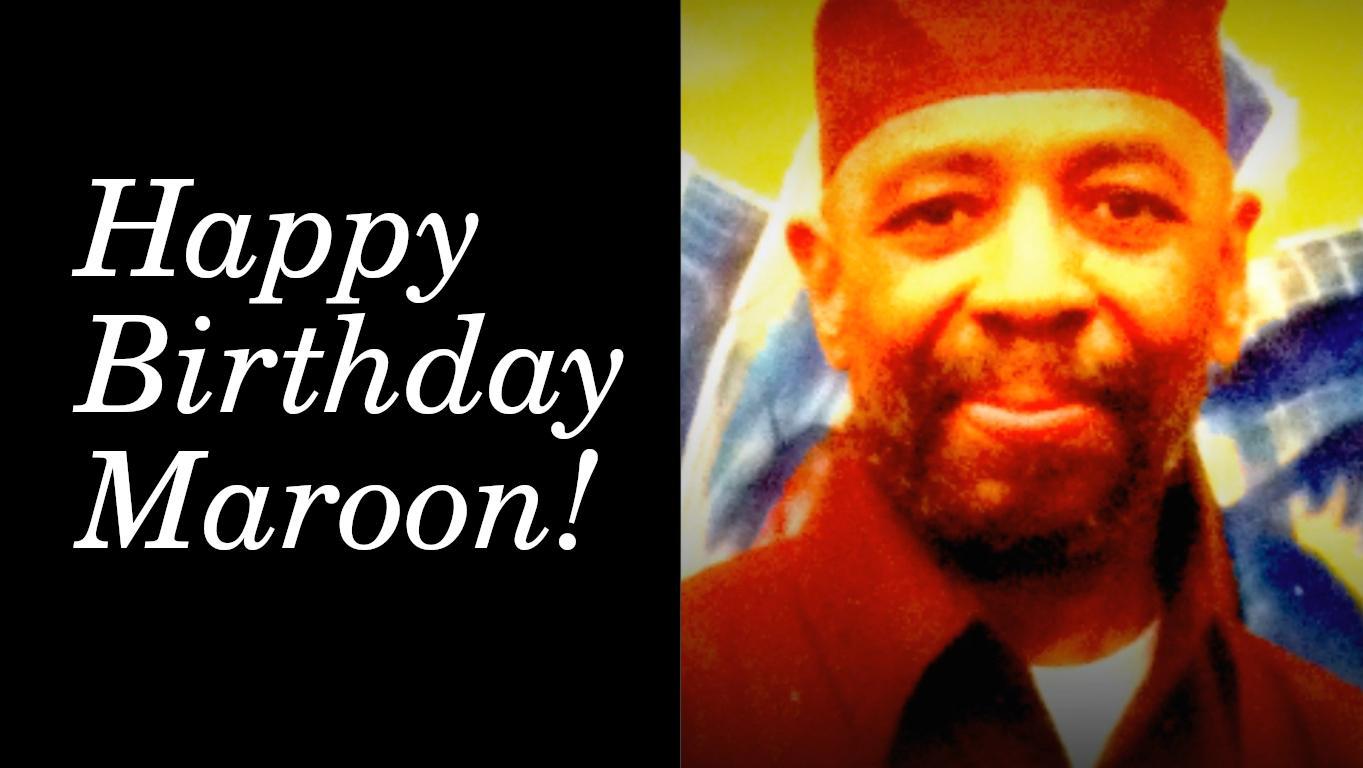
This month’s letter-writing event will be a special Black August edition on Sunday August 23rd, the 77th birthday of Black Liberation prisoner Russell Maroon Shoatz. Join us in signing conscious birthday cards, talking about his case and history of struggle, and engage in political education through a raffle!
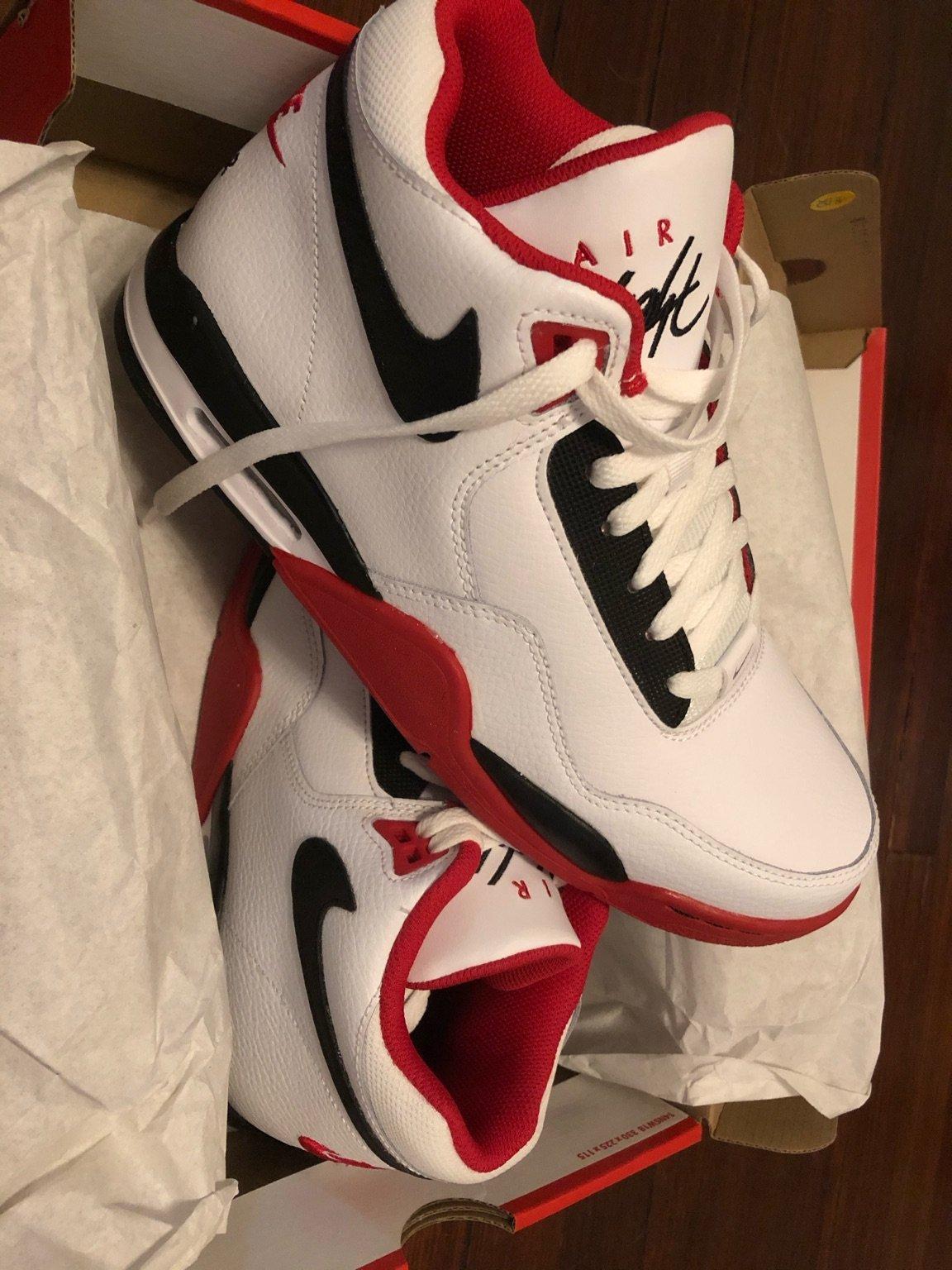
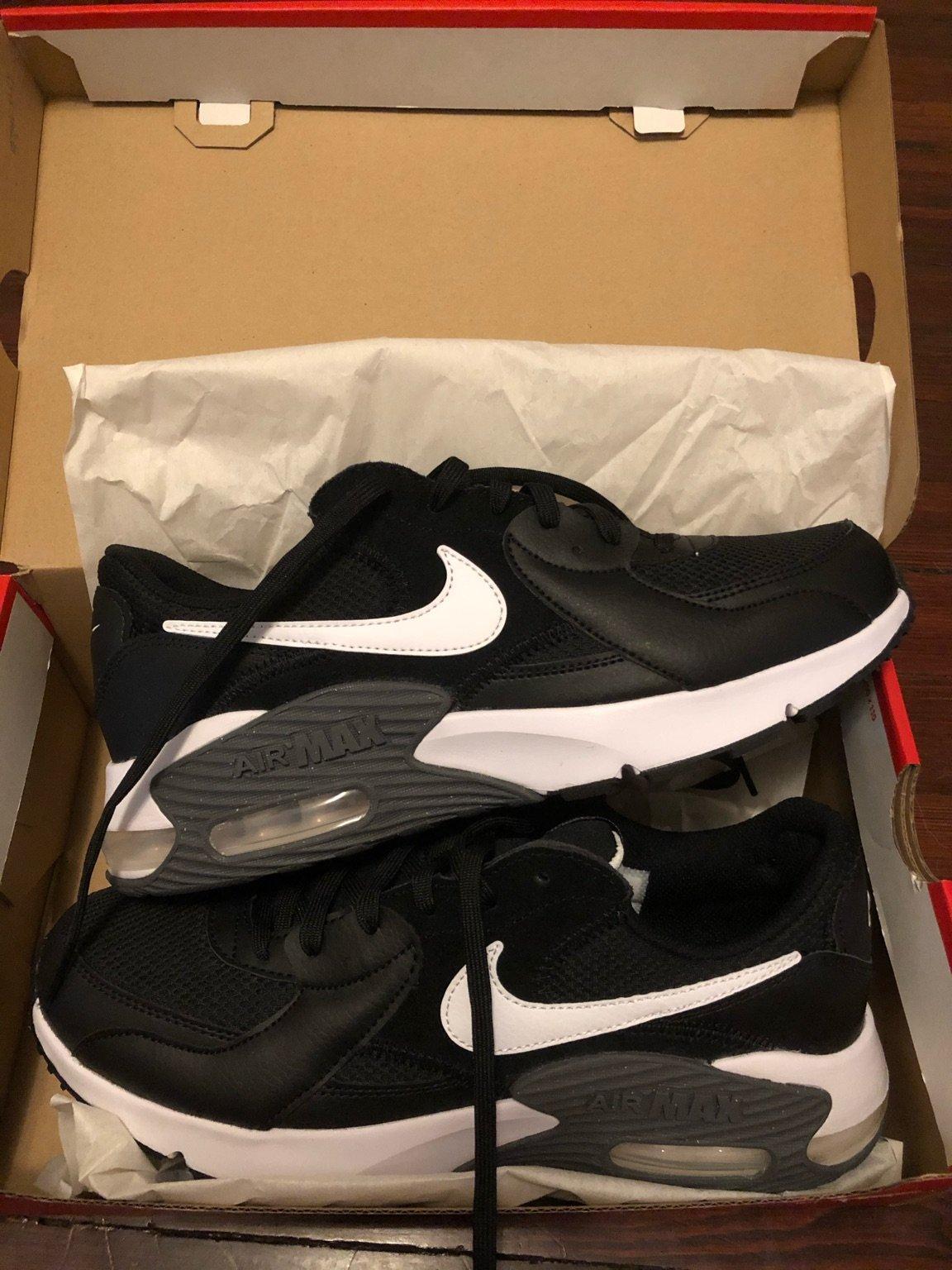
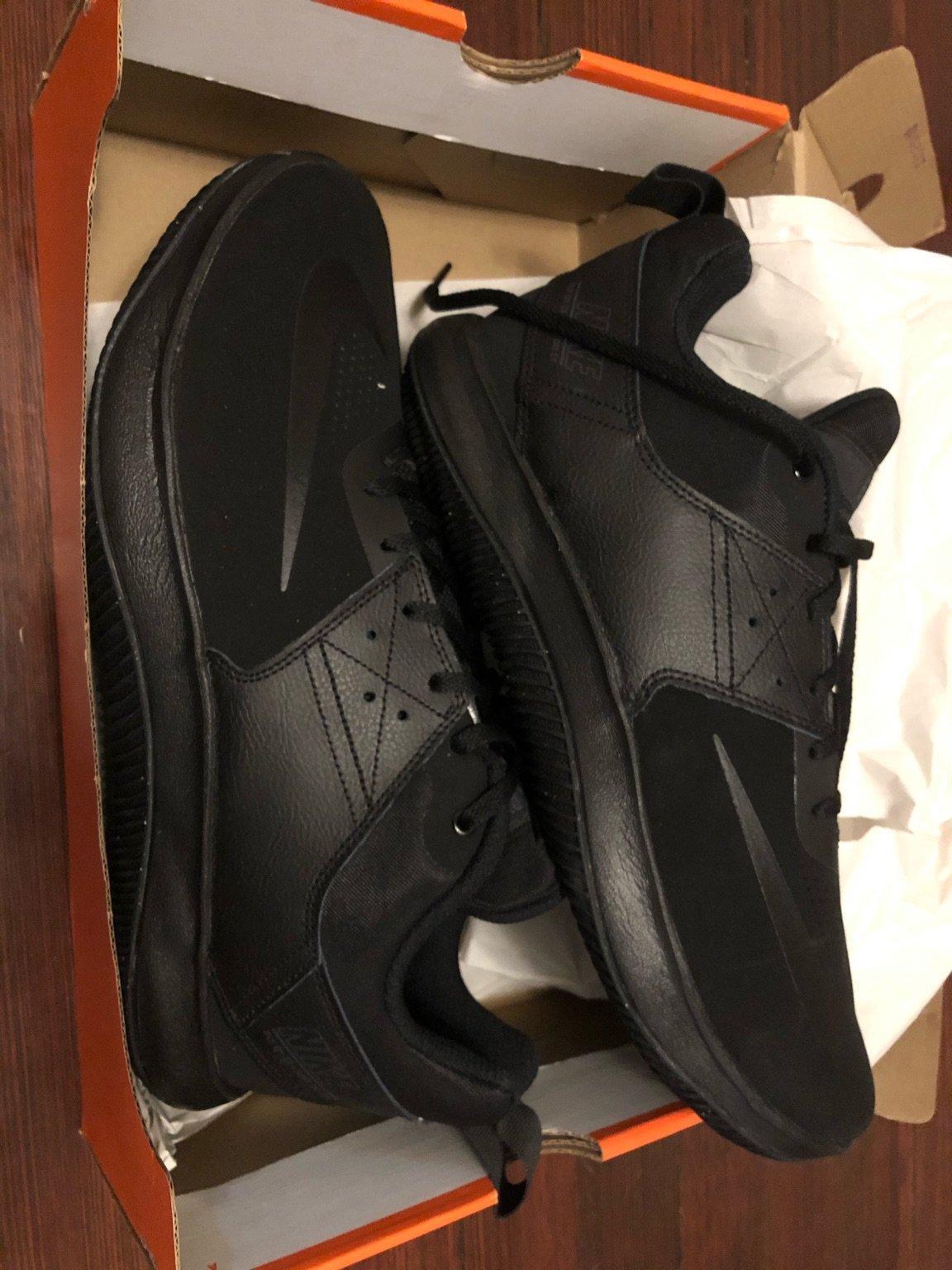
The PE raffle prizes are four pairs of Nike shoes that were donated in support of this event:
Nike Flight Legacy Men’s size 9 – white/black/red
Nike Air Max Excee Men’s size 8.5 – black/white/dark grey
If you win a pair of shoes in your size, great! Otherwise you can trade or give to someone that fits them. The raffle is a way to engage in Black August study, with each ticket containing information on related topics. We look forward to the discussions that carry on after!
We’ll also be making announcements about the upcoming 5K in Maroon’s honor, as the registration deadline is the following day (Aug 24). If you want to participate but haven’t registered yet, you can do it here! We’ll be happy to answer any questions you have and go over logistics. This will also be a good opportunity to submit tabling requests for the event, if you have material you would like to share.
We look forward to seeing you at this special, Black August edition card writing event for Maroon!
from Facebook
WHAT: Black August Reading & Discussion Group
WHEN: August 21, 2020 @ 7 pm est
WHERE: Video meeting, link will be provided day of
Black August acknowledges the fallen comrades that die, sacrifice and struggle for the self-determination and liberation. Black August originated in the California penal system to honor fallen Freedom Fighters, Jonathan Jackson, George Jackson, William Christmas, James McClain, and Khatari Gaulden. Jonathan Jackson was gunned down outside the Marin County California courthouse on August 7, 1970 as he attempted to liberate three imprisoned Black Liberation Fighters: James McClain, William Christmas and Ruchell Magee. Ruchell Magee is the sole survivor of that armed liberation attempt. He is the former co-defendant of Angela Davis and has been locked down for 47 years, most of it in solitary confinement. George Jackson was assassinated by prison guards during a Black prison rebellion at San Quentin on August 21, 1971. Three prison guards were also killed during that rebellion and prison officials charged six Black and Latino prisoners with the death of those guards. They became known as the San Quentin Six.
On July 8th, 1971, Angela Davis and George Jackson met in a holding cell beside a courtroom in the Marin Civic Center in the company of two attorneys and an outside observer. It was the first time that they would be in the same room together for an extended period of time. About a year earlier, Davis had seen Jackson when she attended his pre-trial hearing. She had been organizing to free the Soledad Brothers. After their July 1971 meeting, Angela Davis began to write a series of letters to Jackson. On August 27, 1971 The LA Free Press published commentary by Angela Davis on George Jackson’s death.
On August 21, 2020 at 7 pm we will honor these fallen Freedom Fighters by reading commentary written by Davis and discussing themes such as prison rebellion and solidarity.
“Settle your quarrels, come together, understand the reality of our situation, understand that fascism is already here, that people are already dying who could be saved, that generations more will live poor butchered half-lives if you fail to act. Do what must be done; discover your humanity and your love in revolution.” ― George L. Jackson
[This post only contains information relevant to Philadelphia and the surrounding area, to read the entire article follow the above link.]
Meanwhile in West Philadelphia, thousands gathered at Malcolm X Park for their annual ‘Jawnteenth’ celebration. Philly’s Jawnteenth is a “Juneteenth celebration of Black joy, freedom, and resistance.” The terminology of “Jawn” is a Philly slang descriptor for nouns.
The festivities in Philly included food, community resources, DJs, horses, and the Positive Movement drumline.
After a celebratory march, Krystal Strong from the Black Radical Organizing Collective read demands from the community, some of which included freedom for political prisoners, an abolition of the carceral system, the firing of ‘killer cops,’ the dismantling of police, and more funding for schools and communities.
As the United States starts to wrestle with its historical ills, Juneteenth celebrations in Minneapolis and Philadelphia showed the resilience and self-determination of a community which has endured more than 400 years of systemic oppression by the colonialist settler regime that still reigns today.
Disclaimer: The author is a former employee of WE WIN Institute.